
AlphaFold predicted structure
FOXK2 · Q01167
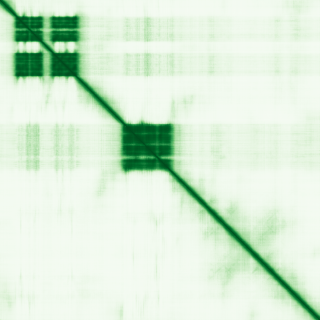
Mean pLDDT
56.4/ 100
Low
660 residues
Confidence breakdown
- Very high(≥ 90)23%
- Confident(70–90)6%
- Low(50–70)7%
- Very low(< 50)64%
Open interactive 3D viewer
AlphaFold (Jumper et al., 2021) · CC BY 4.0
forkhead box K2
Annotations refreshed 2 months ago.
Moderate Evidence (Amber)
Congenital myopathy
MONOALLELIC, autosomal or pseudoautosomal, NOT imprintedneurodegenerative disease
hypothyroidism
response to statin
Hashimoto thyroiditis
seborrheic keratosis
Premature ovarian insufficiency
breast cancer
breast carcinoma
cancer
neoplasm
Score is the Open Targets composite evidence score (0-1). Higher = stronger gene-disease association.
Forkhead box protein K2
Transcriptional regulator involved in different processes such as glucose metabolism, aerobic glycolysis and autophagy (PubMed:38735474). Recognizes and binds the forkhead DNA sequence motif (5'-GTAAACA-3') and can both act as a transcription activator or repressor, depending on the context (PubMed:22083952, PubMed:25451922). Together with FOXK1, acts as a key regulator of metabolic reprogramming towards aerobic glycolysis, a process in which glucose is converted to lactate in the presence of oxygen (By similarity). Acts by promoting expression of enzymes for glycolysis (such as hexokinase-2 (HK2), phosphofructokinase, pyruvate kinase (PKLR) and lactate dehydrogenase), while suppressing further oxidation of pyruvate in the mitochondria by up-regulating pyruvate dehydrogenase kinases PDK1 and PDK4 (By similarity). Probably plays a role in gluconeogenesis during overnight fasting, when lactate from white adipose tissue and muscle is the main substrate (By similarity). Together with FOXK1, acts as a negative regulator of autophagy in skeletal muscle: in response to starvation, enters the nucleus, binds the promoters of autophagy genes and represses their expression, preventing proteolysis of skeletal muscle proteins (By similarity). In addition to the 5'-GTAAACA-3' DNA motif, also binds the 5'-TGANTCA-3' palindromic DNA motif, and co-associates with JUN/AP-1 to activate transcription (PubMed:22083952). Also able to bind to a minimal DNA heteroduplex containing a G/T-mismatch with 5'-TRT[G/T]NB-3' sequence (PubMed:20097901). Binds to NFAT-like motifs (purine-rich) in the IL2 promoter (PubMed:1339390). Positively regulates WNT/beta-catenin signaling by translocating DVL proteins into the nucleus (PubMed:25805136). Also binds to HIV-1 long terminal repeat. May be involved in both positive and negative regulation of important viral and cellular promoter elements (PubMed:1909027). Accessory component of the polycomb repressive deubiquitinase (PR-DUB) complex; recruits the PR-DUB complex to specific FOXK2-bound genes (PubMed:24634419, PubMed:30664650)
FOXK2 · Q01167
Mean pLDDT
56.4/ 100
Low
660 residues
Confidence breakdown
AlphaFold (Jumper et al., 2021) · CC BY 4.0