
AlphaFold predicted structure
FOXP3 · Q9BZS1
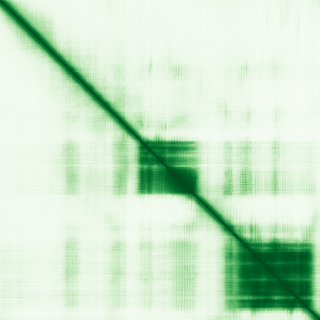
Mean pLDDT
56.7/ 100
Low
431 residues
Confidence breakdown
- Very high(≥ 90)16%
- Confident(70–90)20%
- Low(50–70)7%
- Very low(< 50)57%
Open interactive 3D viewer
AlphaFold (Jumper et al., 2021) · CC BY 4.0
forkhead box P3
Annotations refreshed 3 months ago.
Diagnostic Grade (Green)
COVID-19 research
X-LINKED: hemizygous mutation in males, biallelic mutations in femalesDDG2P
X-LINKED: hemizygous mutation in males, biallelic mutations in femalesDiabetes with additional phenotypes suggestive of a monogenic aetiology
X-LINKED: hemizygous mutation in males, biallelic mutations in femalesFamilial diabetes
X-LINKED: hemizygous mutation in males, biallelic mutations in femalesFetal anomalies
X-LINKED: hemizygous mutation in males, biallelic mutations in femalesFetal hydrops
X-LINKED: hemizygous mutation in males, biallelic mutations in femalesGastrointestinal epithelial barrier disorders
X-LINKED: hemizygous mutation in males, monoallelic mutations in females may cause disease (may be less severe, later onset than males)Infantile enterocolitis & monogenic inflammatory bowel disease
X-LINKED: hemizygous mutation in males, monoallelic mutations in females may cause disease (may be less severe, later onset than males)+8 more panels — install the extension to see the full list inline on any page.
immune dysregulation-polyendocrinopathy-enteropathy-X-linked syndrome
type 1 diabetes mellitus
hydrops fetalis
neurodegenerative disease
centronuclear myopathy
neurodevelopmental disorder
multinucleated neurons-anhydramnios-renal dysplasia-cerebellar hypoplasia-hydranencephaly syndrome
hereditary disease
monogenic diabetes
systemic lupus erythematosus
Score is the Open Targets composite evidence score (0-1). Higher = stronger gene-disease association.
Forkhead box protein P3
Transcriptional regulator which is crucial for the development and inhibitory function of regulatory T-cells (Treg) (PubMed:17377532, PubMed:21458306, PubMed:23947341, PubMed:24354325, PubMed:24722479, PubMed:24835996, PubMed:30513302, PubMed:32644293). Plays an essential role in maintaining homeostasis of the immune system by allowing the acquisition of full suppressive function and stability of the Treg lineage, and by directly modulating the expansion and function of conventional T-cells (PubMed:23169781). Can act either as a transcriptional repressor or a transcriptional activator depending on its interactions with other transcription factors, histone acetylases and deacetylases (PubMed:17377532, PubMed:21458306, PubMed:23947341, PubMed:24354325, PubMed:24722479). The suppressive activity of Treg involves the coordinate activation of many genes, including CTLA4 and TNFRSF18 by FOXP3 along with repression of genes encoding cytokines such as interleukin-2 (IL2) and interferon-gamma (IFNG) (PubMed:17377532, PubMed:21458306, PubMed:23947341, PubMed:24354325, PubMed:24722479). Inhibits cytokine production and T-cell effector function by repressing the activity of two key transcription factors, RELA and NFATC2 (PubMed:15790681). Mediates transcriptional repression of IL2 via its association with histone acetylase KAT5 and histone deacetylase HDAC7 (PubMed:17360565). Can activate the expression of TNFRSF18, IL2RA and CTLA4 and repress the expression of IL2 and IFNG via its association with transcription factor RUNX1 (PubMed:17377532). Inhibits the differentiation of IL17 producing helper T-cells (Th17) by antagonizing RORC function, leading to down-regulation of IL17 expression, favoring Treg development (PubMed:18368049). Inhibits the transcriptional activator activity of RORA (PubMed:18354202). Can repress the expression of IL2 and IFNG via its association with transcription factor IKZF4 (By similarity)
Curated MONDO disease pages that list FOXP3 among their top associated genes.
FOXP3 · Q9BZS1
Mean pLDDT
56.7/ 100
Low
431 residues
Confidence breakdown
AlphaFold (Jumper et al., 2021) · CC BY 4.0