Skip to content
GenoLensGenoLens

FOXRED1

Chr 11q24.2

FAD dependent oxidoreductase domain containing 1

Aliases:
H17
MANE:
ENST00000263578.10

Annotations refreshed 1 month ago.

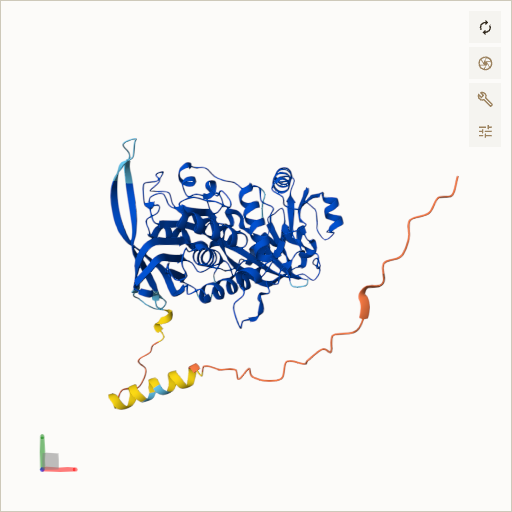
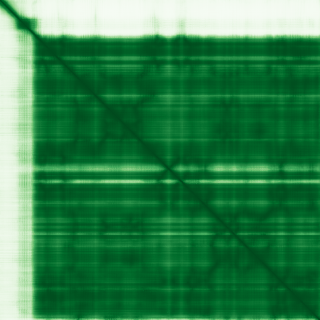
Predicted protein structure

Clinical relevance (Genomics England PanelApp)

Diagnostic Grade (Green)

  • Childhood onset dystonia, chorea or related movement disorder

    BIALLELIC, autosomal or pseudoautosomal
  • DDG2P

    BIALLELIC, autosomal or pseudoautosomal
  • Early onset or syndromic epilepsy

    BIALLELIC, autosomal or pseudoautosomal
  • Fetal anomalies

    BIALLELIC, autosomal or pseudoautosomal
  • Intellectual disability

    BIALLELIC, autosomal or pseudoautosomal
  • Likely inborn error of metabolism

    BIALLELIC, autosomal or pseudoautosomal
  • Mitochondrial disorder with complex I deficiency

    BIALLELIC, autosomal or pseudoautosomal
  • Mitochondrial disorders

    BIALLELIC, autosomal or pseudoautosomal

+7 more panels — install the extension to see the full list inline on any page.

Disease associations (Open Targets)

  • mitochondrial complex I deficiency

    0.78
  • mitochondrial complex I deficiency, nuclear type 19

    0.74
  • Leigh syndrome

    0.66
  • mitochondrial disease

    0.65
  • mitochondrial complex I deficiency, nuclear type 1

    0.63
  • inborn mitochondrial metabolism disorder

    0.60
  • hereditary disease

    0.52
  • Leigh syndrome with cardiomyopathy

    0.50
  • maternally-inherited Leigh syndrome

    0.50
  • Mitochondrial encephalopathy

    0.35

Score is the Open Targets composite evidence score (0-1). Higher = stronger gene-disease association.

Protein function (UniProt)

FAD-dependent oxidoreductase domain-containing protein 1

Required for the assembly of the mitochondrial membrane respiratory chain NADH dehydrogenase (Complex I) (PubMed:20858599, PubMed:25678554). Involved in mid-late stages of complex I assembly (PubMed:25678554)

Data sources: HGNC (CC BY 4.0), AlphaFold (CC BY 4.0, Jumper et al. Nature 2021), Genomics England PanelApp (CC BY 4.0), ClinGen, Open Targets (CC0), UniProt.

Not for sole clinical decision-making. Always verify against primary sources.