
AlphaFold predicted structure
FUZ · Q9BT04
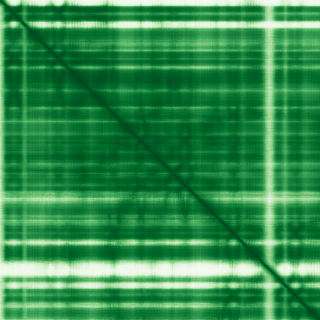
Mean pLDDT
87.4/ 100
Confident
418 residues
Confidence breakdown
- Very high(≥ 90)61%
- Confident(70–90)31%
- Low(50–70)4%
- Very low(< 50)5%
Open interactive 3D viewer
AlphaFold (Jumper et al., 2021) · CC BY 4.0
fuzzy planar cell polarity protein
Annotations refreshed 2 months ago.
Diagnostic Grade (Green)
Fetal anomalies
BIALLELIC, autosomal or pseudoautosomalCurrarino triad
MONOALLELIC, autosomal or pseudoautosomal, imprinted status unknownFamilial Neural Tube Defects
Rare syndromic craniosynostosis or isolated multisuture synostosis
BIALLELIC, autosomal or pseudoautosomalciliopathy
caudal regression sequence
short-rib thoracic dysplasia 6 with or without polydactyly
neural tube defect
Alzheimer disease
multiple sclerosis
Parkinson disease
lysosomal storage disease
neurodegenerative disease
amelogenesis imperfecta
Score is the Open Targets composite evidence score (0-1). Higher = stronger gene-disease association.
Protein fuzzy homolog
Probable planar cell polarity effector involved in cilium biogenesis. May regulate protein and membrane transport to the cilium. Proposed to function as core component of the CPLANE (ciliogenesis and planar polarity effectors) complex involved in the recruitment of peripheral IFT-A proteins to basal bodies. May regulate the morphogenesis of hair follicles which depends on functional primary cilia. Binds phosphatidylinositol 3-phosphate with highest affinity, followed by phosphatidylinositol 4-phosphate and phosphatidylinositol 5-phosphate (By similarity)
FUZ · Q9BT04
Mean pLDDT
87.4/ 100
Confident
418 residues
Confidence breakdown
AlphaFold (Jumper et al., 2021) · CC BY 4.0