
AlphaFold predicted structure
FZD4 · Q9ULV1
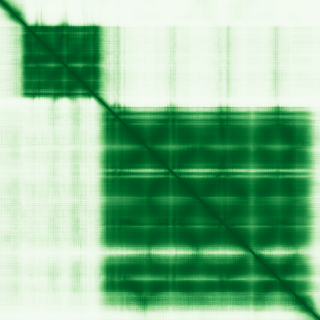
Mean pLDDT
84.3/ 100
Confident
537 residues
Confidence breakdown
- Very high(≥ 90)57%
- Confident(70–90)26%
- Low(50–70)7%
- Very low(< 50)10%
Open interactive 3D viewer
AlphaFold (Jumper et al., 2021) · CC BY 4.0
frizzled class receptor 4
Annotations refreshed 3 months ago.
Diagnostic Grade (Green)
Retinal disorders
MONOALLELIC, autosomal or pseudoautosomal, imprinted status unknownStructural eye disease
MONOALLELIC, autosomal or pseudoautosomal, NOT imprintedBilateral congenital or childhood onset cataracts
MONOALLELIC, autosomal or pseudoautosomal, imprinted status unknownGlaucoma (developmental)
Familial exudative vitreoretinopathy
Retinal dystrophy
exudative vitreoretinopathy
Coats disease
eye disorder
retinopathy of prematurity
persistent hyperplastic primary vitreous
FZD4-related exudative vitreoretinopathy
Norrie disease
retinal disorder
Score is the Open Targets composite evidence score (0-1). Higher = stronger gene-disease association.
Frizzled-4
Receptor for Wnt proteins (PubMed:30135577). Most frizzled receptors are coupled to the beta-catenin (CTNNB1) canonical signaling pathway, which leads to the activation of disheveled proteins, inhibition of GSK-3 kinase, nuclear accumulation of beta-catenin (CTNNB1) and activation of Wnt target genes (PubMed:30135577). Plays a critical role in retinal vascularization by acting as a receptor for Wnt proteins and norrin (NDP) (By similarity). In retina, it can be activated by Wnt protein-binding and also by Wnt-independent signaling via binding of norrin (NDP), promoting in both cases beta-catenin (CTNNB1) accumulation and stimulation of LEF/TCF-mediated transcriptional programs (By similarity). A second signaling pathway involving PKC and calcium fluxes has been seen for some family members, but it is not yet clear if it represents a distinct pathway or if it can be integrated in the canonical pathway, as PKC seems to be required for Wnt-mediated inactivation of GSK-3 kinase. Both pathways seem to involve interactions with G proteins. May be involved in transduction and intercellular transmission of polarity information during tissue morphogenesis and/or in differentiated tissues
FZD4 · Q9ULV1
Mean pLDDT
84.3/ 100
Confident
537 residues
Confidence breakdown
AlphaFold (Jumper et al., 2021) · CC BY 4.0