
AlphaFold predicted structure
FZD5 · Q13467
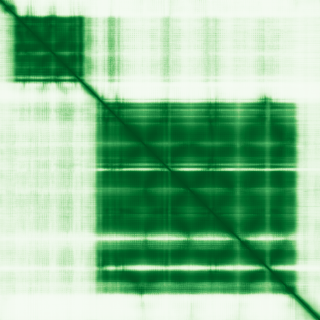
Mean pLDDT
81.6/ 100
Confident
585 residues
Confidence breakdown
- Very high(≥ 90)55%
- Confident(70–90)23%
- Low(50–70)8%
- Very low(< 50)14%
Open interactive 3D viewer
AlphaFold (Jumper et al., 2021) · CC BY 4.0
frizzled class receptor 5
Annotations refreshed 2 months ago.
Diagnostic Grade (Green)
DDG2P
MONOALLELIC, autosomal or pseudoautosomal, imprinted status unknownOcular coloboma
MONOALLELIC, autosomal or pseudoautosomal, NOT imprintedStructural eye disease
MONOALLELIC, autosomal or pseudoautosomal, NOT imprintedFetal anomalies
MONOALLELIC, autosomal or pseudoautosomal, NOT imprintedmicrophthalmia/coloboma 11
coloboma
coloboma of optic nerve
coloboma of choroid and retina
coloboma of eyelid
coloboma of macula
coloboma of eye lens
coloboma of iris
Coloboma of optic papilla
neurodegenerative disease
Score is the Open Targets composite evidence score (0-1). Higher = stronger gene-disease association.
Frizzled-5
Receptor for Wnt proteins (PubMed:10097073, PubMed:20530549, PubMed:26908622, PubMed:9054360). Functions in the canonical Wnt/beta-catenin signaling pathway. In vitro activates WNT2, WNT10B, WNT5A, but not WNT2B or WNT4 signaling (By similarity). In neurons, activation by WNT7A promotes formation of synapses (PubMed:20530549). May be involved in transduction and intercellular transmission of polarity information during tissue morphogenesis and/or in differentiated tissues (Probable). Plays a role in yolk sac angiogenesis and in placental vascularization (By similarity). Plays a role in ocular development (PubMed:26908622)
FZD5 · Q13467
Mean pLDDT
81.6/ 100
Confident
585 residues
Confidence breakdown
AlphaFold (Jumper et al., 2021) · CC BY 4.0