
AlphaFold predicted structure
G6PD · P11413
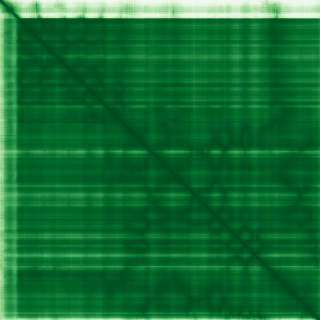
Mean pLDDT
94.4/ 100
Very high
515 residues
Confidence breakdown
- Very high(≥ 90)91%
- Confident(70–90)3%
- Low(50–70)4%
- Very low(< 50)2%
Open interactive 3D viewer
AlphaFold (Jumper et al., 2021) · CC BY 4.0
glucose-6-phosphate dehydrogenase
Annotations refreshed 3 months ago.
Diagnostic Grade (Green)
COVID-19 research
X-LINKED: hemizygous mutation in males, biallelic mutations in femalesCytopenias and congenital anaemias
X-LINKED: hemizygous mutation in males, monoallelic mutations in females may cause disease (may be less severe, later onset than males)Primary immunodeficiency or monogenic inflammatory bowel disease
X-LINKED: hemizygous mutation in males, biallelic mutations in femalesRare anaemia
X-LINKED: hemizygous mutation in males, monoallelic mutations in females may cause disease (may be less severe, later onset than males)Fetal anomalies
X-LINKED: hemizygous mutation in males, monoallelic mutations in females may cause disease (may be less severe, later onset than males)Fetal hydrops
X-LINKED: hemizygous mutation in males, monoallelic mutations in females may cause disease (may be less severe, later onset than males)anemia, nonspherocytic hemolytic, due to G6PD deficiency
anemia (phenotype)
G6PD deficiency
hereditary disease
infection
non-autoimmune hemolytic anemia
hypercholesterolemia, familial, 1
cancer
congenital nonspherocytic hemolytic anemia
Congenital hemolytic anemia
Score is the Open Targets composite evidence score (0-1). Higher = stronger gene-disease association.
Glucose-6-phosphate 1-dehydrogenase
Catalyzes the rate-limiting step of the oxidative pentose-phosphate pathway, which represents a route for the dissimilation of carbohydrates besides glycolysis. The main function of this enzyme is to provide reducing power (NADPH) and pentose phosphates for fatty acid and nucleic acid synthesis. Also catalyzes the conversion of NAADPH, which is produced by enzymes such as DUOX1, DUOX2 and NOX5 from NAADP and promotes Ca(2+) signaling during T cell activation, back to NAADP (PubMed:34784249)
Curated MONDO disease pages that list G6PD among their top associated genes.
G6PD · P11413
Mean pLDDT
94.4/ 100
Very high
515 residues
Confidence breakdown
AlphaFold (Jumper et al., 2021) · CC BY 4.0