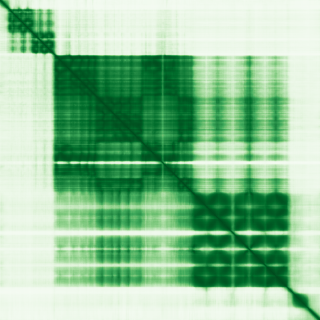
Gamma-aminobutyric acid type B receptor subunit 1
Component of a heterodimeric G protein-coupled receptor for GABA, formed by GABBR1 and GABBR2 (PubMed:15617512, PubMed:18165688, PubMed:22660477, PubMed:24305054, PubMed:36103875, PubMed:9872316, PubMed:9872744). Within the heterodimeric GABA receptor, only GABBR1 seems to bind agonists, while GABBR2 mediates coupling to G proteins (PubMed:18165688). Ligand binding causes a conformation change that triggers signaling via guanine nucleotide-binding proteins (G proteins) and modulates the activity of down-stream effectors, such as adenylate cyclase (PubMed:10075644, PubMed:10773016, PubMed:10906333, PubMed:24305054, PubMed:9872744). Signaling inhibits adenylate cyclase, stimulates phospholipase A2, activates potassium channels, inactivates voltage-dependent calcium-channels and modulates inositol phospholipid hydrolysis (PubMed:10075644). Calcium is required for high affinity binding to GABA (By similarity). Plays a critical role in the fine-tuning of inhibitory synaptic transmission (PubMed:9844003). Pre-synaptic GABA receptor inhibits neurotransmitter release by down-regulating high-voltage activated calcium channels, whereas postsynaptic GABA receptor decreases neuronal excitability by activating a prominent inwardly rectifying potassium (Kir) conductance that underlies the late inhibitory postsynaptic potentials (PubMed:10075644, PubMed:22660477, PubMed:9844003, PubMed:9872316, PubMed:9872744). Not only implicated in synaptic inhibition but also in hippocampal long-term potentiation, slow wave sleep, muscle relaxation and antinociception (Probable). Activated by (-)-baclofen, cgp27492 and blocked by phaclofen (PubMed:24305054, PubMed:9844003, PubMed:9872316)