
AlphaFold predicted structure
GBA2 · Q9HCG7
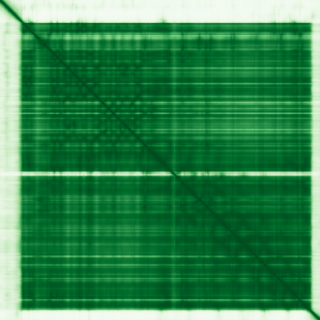
Mean pLDDT
89.3/ 100
Confident
927 residues
Confidence breakdown
- Very high(≥ 90)83%
- Confident(70–90)6%
- Low(50–70)1%
- Very low(< 50)10%
Open interactive 3D viewer
AlphaFold (Jumper et al., 2021) · CC BY 4.0
glucosylceramidase beta 2
Annotations refreshed 2 months ago.
Diagnostic Grade (Green)
Adult onset hereditary spastic paraplegia
BIALLELIC, autosomal or pseudoautosomalAtaxia and cerebellar anomalies - narrow panel
BIALLELIC, autosomal or pseudoautosomalChildhood onset hereditary spastic paraplegia
BIALLELIC, autosomal or pseudoautosomalDDG2P
BIALLELIC, autosomal or pseudoautosomalFetal anomalies
BIALLELIC, autosomal or pseudoautosomalHereditary ataxia
BIALLELIC, autosomal or pseudoautosomalHereditary ataxia with onset in adulthood
BIALLELIC, autosomal or pseudoautosomalHereditary neuropathy
BIALLELIC, autosomal or pseudoautosomal+5 more panels — install the extension to see the full list inline on any page.
Autosomal recessive spastic paraplegia type 46
hereditary spastic paraplegia 46
Spastic paraplegia
hereditary spastic paraplegia
complex hereditary spastic paraplegia
autosomal recessive cerebellar ataxia with late-onset spasticity
neurodevelopmental disorder
type 2 diabetes mellitus
Parkinson disease
CEP290-related ciliopathy
Score is the Open Targets composite evidence score (0-1). Higher = stronger gene-disease association.
Non-lysosomal glucosylceramidase
Non-lysosomal glucosylceramidase that catalyzes the hydrolysis of glucosylceramides/GlcCers (such as beta-D-glucosyl-(1<->1')-N-acylsphing-4-enine) to free glucose and ceramides (such as N-acylsphing-4-enine) (PubMed:17105727, PubMed:30308956, PubMed:32144204). GlcCers are membrane glycosphingolipids that have a wide intracellular distribution (By similarity). They are the main precursors of more complex glycosphingolipids that play a role in cellular growth, differentiation, adhesion, signaling, cytoskeletal dynamics and membrane properties (By similarity). Involved in the transglucosylation of cholesterol, transfers glucose from GlcCer to cholesterol, thereby modifying its water solubility and biological properties (PubMed:32144204). Under specific conditions, may catalyze the reverse reaction, transferring glucose from cholesteryl-3-beta-D-glucoside to ceramide (such as N-acylsphing-4-enine) (Probable). May play a role in the metabolism of bile acids (PubMed:11489889, PubMed:17080196, PubMed:9111029). Able to hydrolyze bile acid 3-O-glucosides as well as to produce bile acid-glucose conjugates thanks to a bile acid glucosyl transferase activity (PubMed:11489889, PubMed:17080196, PubMed:9111029). Catalyzes the hydrolysis of galactosylceramides/GalCers (such as beta-D-galactosyl-(1<->1')-N-acylsphing-4-enine), as well as the galactosyl transfer between GalCers and cholesterol in vitro with lower activity compared with their activity against GlcCers (PubMed:32144204)
GBA2 · Q9HCG7
Mean pLDDT
89.3/ 100
Confident
927 residues
Confidence breakdown
AlphaFold (Jumper et al., 2021) · CC BY 4.0