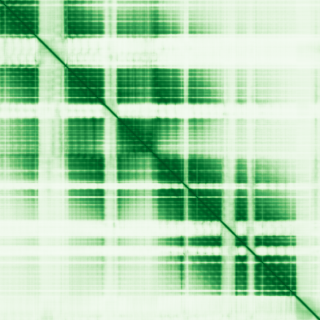
Golgi-specific brefeldin A-resistance guanine nucleotide exchange factor 1
Guanine-nucleotide exchange factor (GEF) for members of the Arf family of small GTPases involved in trafficking in the early secretory pathway; its GEF activity initiates the coating of nascent vesicles via the localized generation of activated ARFs through replacement of GDP with GTP. Recruitment to cis-Golgi membranes requires membrane association of Arf-GDP and can be regulated by ARF1, ARF3, ARF4 and ARF5. Involved in the recruitment of the COPI coat complex to the endoplasmic reticulum exit sites (ERES), and the endoplasmic reticulum-Golgi intermediate (ERGIC) and cis-Golgi compartments which implicates ARF1 activation. Involved in COPI vesicle-dependent retrograde transport from the ERGIC and cis-Golgi compartments to the endoplasmic reticulum (ER) (PubMed:12047556, PubMed:12808027, PubMed:16926190, PubMed:17956946, PubMed:18003980, PubMed:19039328, PubMed:24213530). Involved in the trans-Golgi network recruitment of GGA1, GGA2, GGA3, BIG1, BIG2, and the AP-1 adaptor protein complex related to chlathrin-dependent transport; the function requires its GEF activity (probably at least in part on ARF4 and ARF5) (PubMed:23386609). Has GEF activity towards ARF1 (PubMed:15616190). Has in vitro GEF activity towards ARF5 (By similarity). Involved in the processing of PSAP (PubMed:17666033). Required for the assembly of the Golgi apparatus (PubMed:12808027, PubMed:18003980). The AMPK-phosphorylated form is involved in Golgi disassembly during mitotis and under stress conditions (PubMed:18063581, PubMed:23418352). May be involved in the COPI vesicle-dependent recruitment of PNPLA2 to lipid droplets; however, this function is under debate (PubMed:19461073, PubMed:22185782). In neutrophils, involved in G protein-coupled receptor (GPCR)-mediated chemotaxis und superoxide production. Proposed to be recruited by phosphatidylinositol-phosphates generated upon GPCR stimulation to the leading edge where it recruits and activates ARF1, and is involved in recruitment of GIT2 and the NADPH oxidase complex (PubMed:22573891). Plays a role in maintaining mitochondrial morphology (PubMed:25190516)