
AlphaFold predicted structure
GCH1 · P30793
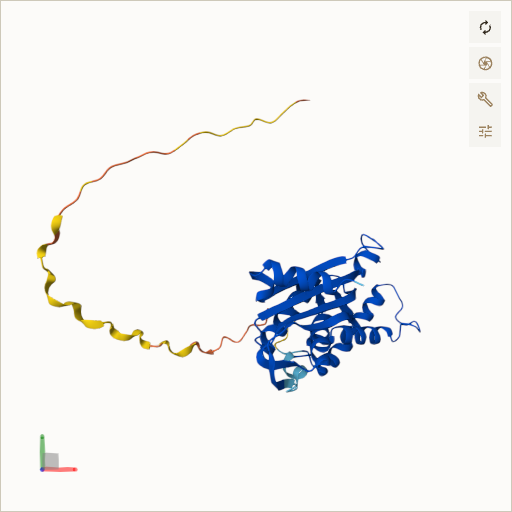
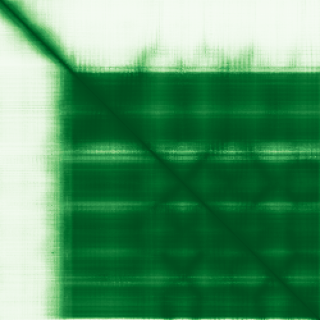
Mean pLDDT
86.5/ 100
Confident
250 residues
Confidence breakdown
- Very high(≥ 90)73%
- Confident(70–90)5%
- Low(50–70)13%
- Very low(< 50)9%
Open interactive 3D viewer
AlphaFold (Jumper et al., 2021) · CC BY 4.0
GTP cyclohydrolase 1
Annotations refreshed 2 months ago.
Diagnostic Grade (Green)
Adult onset dystonia, chorea or related movement disorder
BOTH monoallelic and biallelic, autosomal or pseudoautosomalAdult onset hereditary spastic paraplegia
BOTH monoallelic and biallelic, autosomal or pseudoautosomalAdult onset neurodegenerative disorder
BOTH monoallelic and biallelic, autosomal or pseudoautosomalChildhood onset dystonia, chorea or related movement disorder
BOTH monoallelic and biallelic, autosomal or pseudoautosomalChildhood onset hereditary spastic paraplegia
BOTH monoallelic and biallelic, autosomal or pseudoautosomalDDG2P
BOTH monoallelic and biallelic, autosomal or pseudoautosomalEarly onset dystonia
BOTH monoallelic and biallelic, autosomal or pseudoautosomalIntellectual disability
BOTH monoallelic and biallelic, autosomal or pseudoautosomal+7 more panels — install the extension to see the full list inline on any page.
dystonia 5
GTP cyclohydrolase I deficiency with hyperphenylalaninemia
Hyperphenylalaninemia
GTP cyclohydrolase I deficiency
Dystonia
Spastic paraplegia
Autosomal recessive dopa-responsive dystonia
dystonic disorder
hereditary disease
dopa-responsive dystonia
Score is the Open Targets composite evidence score (0-1). Higher = stronger gene-disease association.
GTP cyclohydrolase 1
Positively regulates nitric oxide synthesis in umbilical vein endothelial cells (HUVECs). May be involved in dopamine synthesis. May modify pain sensitivity and persistence. Isoform GCH-1 is the functional enzyme, the potential function of the enzymatically inactive isoforms remains unknown
GCH1 · P30793
Mean pLDDT
86.5/ 100
Confident
250 residues
Confidence breakdown
AlphaFold (Jumper et al., 2021) · CC BY 4.0