
AlphaFold predicted structure
GDF3 · Q9NR23
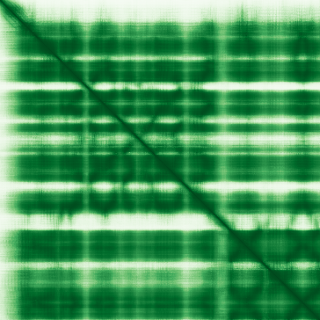
Mean pLDDT
82.5/ 100
Confident
364 residues
Confidence breakdown
- Very high(≥ 90)48%
- Confident(70–90)32%
- Low(50–70)16%
- Very low(< 50)5%
Open interactive 3D viewer
AlphaFold (Jumper et al., 2021) · CC BY 4.0
growth differentiation factor 3
Annotations refreshed 3 months ago.
Moderate Evidence (Amber)
Structural eye disease
MONOALLELIC, autosomal or pseudoautosomal, NOT imprintedAnophthalmia or microphthalmia
MONOALLELIC, autosomal or pseudoautosomal, imprinted status unknownDDG2P
MONOALLELIC, autosomal or pseudoautosomal, imprinted status unknownFamilial Neural Tube Defects
MONOALLELIC, autosomal or pseudoautosomal, imprinted status unknownOcular coloboma
MONOALLELIC, autosomal or pseudoautosomal, NOT imprintedSkeletal dysplasia
MONOALLELIC, autosomal or pseudoautosomal, NOT imprintedisolated microphthalmia 7
microphthalmia, isolated, with coloboma
Isolated anophthalmia - microphthalmia
Klippel-Feil syndrome 3, autosomal dominant
Klippel-Feil syndrome
isolated Klippel-Feil syndrome
neurodegenerative disease
melanoma
metabolic dysfunction-associated steatohepatitis
Sepsis
Score is the Open Targets composite evidence score (0-1). Higher = stronger gene-disease association.
Growth/differentiation factor 3
Growth factor involved in early embryonic development and adipose-tissue homeostasis. During embryogenesis controls formation of anterior visceral endoderm and mesoderm and the establishment of anterior-posterior identity through a receptor complex comprising the receptor ACVR1B and the coreceptor CRIPTO (By similarity). Regulates adipose-tissue homeostasis and energy balance under nutrient overload in part by signaling through the receptor complex based on ACVR1C and CRIPTO/Cripto (PubMed:21805089)
GDF3 · Q9NR23
Mean pLDDT
82.5/ 100
Confident
364 residues
Confidence breakdown
AlphaFold (Jumper et al., 2021) · CC BY 4.0