Skip to content
GenoLensGenoLens

GDF6

Chr 8q22.1

growth differentiation factor 6

Aliases:
BMP13, KFS, KFS1
MANE:
ENST00000287020.7

Annotations refreshed 1 month ago.

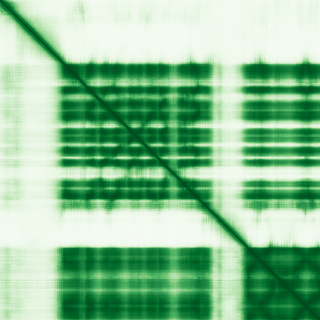
Predicted protein structure

Clinical relevance (Genomics England PanelApp)

Diagnostic Grade (Green)

  • DDG2P

    MONOALLELIC, autosomal or pseudoautosomal, imprinted status unknown
  • Fetal anomalies

    MONOALLELIC, autosomal or pseudoautosomal, imprinted status unknown
  • Skeletal dysplasia

    MONOALLELIC, autosomal or pseudoautosomal, NOT imprinted
  • Structural eye disease

    MONOALLELIC, autosomal or pseudoautosomal, NOT imprinted
  • Deafness and congenital structural abnormalities

    MONOALLELIC, autosomal or pseudoautosomal, NOT imprinted
  • Retinal disorders

    BOTH monoallelic and biallelic, autosomal or pseudoautosomal
  • Anophthalmia or microphthalmia

  • Currarino triad

    MONOALLELIC, autosomal or pseudoautosomal, imprinted status unknown

+3 more panels — install the extension to see the full list inline on any page.

Disease associations (Open Targets)

  • Klippel-Feil syndrome 1, autosomal dominant

    0.77
  • isolated microphthalmia 4

    0.75
  • Isolated anophthalmia - microphthalmia

    0.71
  • Leber congenital amaurosis 17

    0.69
  • multiple synostoses syndrome

    0.60
  • microphthalmia, isolated, with coloboma

    0.52
  • multiple synostoses syndrome 4

    0.50
  • congenital anomaly of kidney and urinary tract

    0.44
  • Leber congenital amaurosis

    0.42
  • microphthalmia

    0.38

Score is the Open Targets composite evidence score (0-1). Higher = stronger gene-disease association.

Protein function (UniProt)

Growth/differentiation factor 6

Growth factor that controls proliferation and cellular differentiation in the retina and bone formation. Plays a key role in regulating apoptosis during retinal development. Establishes dorsal-ventral positional information in the retina and controls the formation of the retinotectal map (PubMed:23307924). Required for normal formation of bones and joints in the limbs, skull, digits and axial skeleton. Plays a key role in establishing boundaries between skeletal elements during development. Regulation of GDF6 expression seems to be a mechanism for evolving species-specific changes in skeletal structures. Seems to positively regulate differentiation of chondrogenic tissue through the growth factor receptors subunits BMPR1A, BMPR1B, BMPR2 and ACVR2A, leading to the activation of SMAD1-SMAD5-SMAD8 complex. The regulation of chondrogenic differentiation is inhibited by NOG (PubMed:26643732). Also involved in the induction of adipogenesis from mesenchymal stem cells. This mechanism acts through the growth factor receptors subunits BMPR1A, BMPR2 and ACVR2A and the activation of SMAD1-SMAD5-SMAD8 complex and MAPK14/p38 (By similarity)

Data sources: HGNC (CC BY 4.0), AlphaFold (CC BY 4.0, Jumper et al. Nature 2021), Genomics England PanelApp (CC BY 4.0), ClinGen, Open Targets (CC0), UniProt.

Not for sole clinical decision-making. Always verify against primary sources.