
AlphaFold predicted structure
GDF9 · O60383
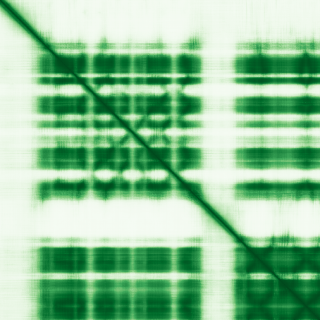
Mean pLDDT
66.3/ 100
Low
454 residues
Confidence breakdown
- Very high(≥ 90)28%
- Confident(70–90)20%
- Low(50–70)16%
- Very low(< 50)36%
Open interactive 3D viewer
AlphaFold (Jumper et al., 2021) · CC BY 4.0
growth differentiation factor 9
Annotations refreshed 2 months ago.
Moderate Evidence (Amber)
Primary ovarian insufficiency
MONOALLELIC, autosomal or pseudoautosomal, NOT imprinted46,XX gonadal dysgenesis
genetic non-acquired premature ovarian failure
primary ovarian failure
Premature ovarian insufficiency
Isolated CoQ-cytochrome C reductase deficiency
polycystic ovary syndrome
endometriosis
kidney cancer
46,XX testicular disorder of sex development
male infertility with azoospermia or oligozoospermia due to single gene mutation
Score is the Open Targets composite evidence score (0-1). Higher = stronger gene-disease association.
Growth/differentiation factor 9
Required for ovarian folliculogenesis. Promotes primordial follicle development. Stimulates granulosa cell proliferation. Promotes cell transition from G0/G1 to S and G2/M phases, through an increase of CCND1 and CCNE1 expression, and RB1 phosphorylation. It regulates STAR expression and cAMP-dependent progesterone release in granulosa and thecal cells. Attenuates the suppressive effects of activin A on STAR expression and progesterone production by increasing the expression of inhibin B. It suppresses FST and FSTL3 production in granulosa-lutein cells
GDF9 · O60383
Mean pLDDT
66.3/ 100
Low
454 residues
Confidence breakdown
AlphaFold (Jumper et al., 2021) · CC BY 4.0