AlphaFold predicted structure
GEMIN4 · P57678
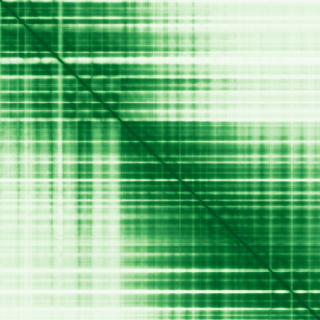
Mean pLDDT
84.3/ 100
Confident
1,058 residues
Confidence breakdown
- Very high(≥ 90)44%
- Confident(70–90)43%
- Low(50–70)9%
- Very low(< 50)4%
AlphaFold (Jumper et al., 2021) · CC BY 4.0
gem nuclear organelle associated protein 4
Annotations refreshed 1 month ago.
Diagnostic Grade (Green)
Bilateral congenital or childhood onset cataracts
BIALLELIC, autosomal or pseudoautosomalDDG2P
BIALLELIC, autosomal or pseudoautosomalFetal anomalies
BIALLELIC, autosomal or pseudoautosomalIntellectual disability
BIALLELIC, autosomal or pseudoautosomalneurodevelopmental disorder with microcephaly, cataracts, and renal abnormalities
neurodegenerative disease
microcephaly
Global developmental delay
Developmental cataract
Hyperlipoproteinemia type 1
myeloid sarcoma
cancer
hyperlipoproteinemia type V
Hyperlipoproteinemia type 5
Score is the Open Targets composite evidence score (0-1). Higher = stronger gene-disease association.
Gem-associated protein 4
The SMN complex catalyzes the assembly of small nuclear ribonucleoproteins (snRNPs), the building blocks of the spliceosome, and thereby plays an important role in the splicing of cellular pre-mRNAs. Most spliceosomal snRNPs contain a common set of Sm proteins SNRPB, SNRPD1, SNRPD2, SNRPD3, SNRPE, SNRPF and SNRPG that assemble in a heptameric protein ring on the Sm site of the small nuclear RNA to form the core snRNP (Sm core). In the cytosol, the Sm proteins SNRPD1, SNRPD2, SNRPE, SNRPF and SNRPG are trapped in an inactive 6S pICln-Sm complex by the chaperone CLNS1A that controls the assembly of the core snRNP. To assemble core snRNPs, the SMN complex accepts the trapped 5Sm proteins from CLNS1A forming an intermediate. Binding of snRNA inside 5Sm triggers eviction of the SMN complex, thereby allowing binding of SNRPD3 and SNRPB to complete assembly of the core snRNP
GEMIN4 · P57678

Mean pLDDT
84.3/ 100
Confident
1,058 residues
Confidence breakdown
AlphaFold (Jumper et al., 2021) · CC BY 4.0