
AlphaFold predicted structure
GFER · P55789
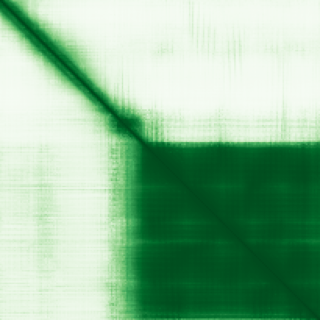
Mean pLDDT
76.9/ 100
Confident
205 residues
Confidence breakdown
- Very high(≥ 90)54%
- Confident(70–90)5%
- Low(50–70)16%
- Very low(< 50)25%
Open interactive 3D viewer
AlphaFold (Jumper et al., 2021) · CC BY 4.0
growth factor, augmenter of liver regeneration
Annotations refreshed 2 months ago.
Diagnostic Grade (Green)
Bilateral congenital or childhood onset cataracts
BIALLELIC, autosomal or pseudoautosomalCongenital myopathy
BIALLELIC, autosomal or pseudoautosomalDDG2P
BIALLELIC, autosomal or pseudoautosomalIntellectual disability
BIALLELIC, autosomal or pseudoautosomalLikely inborn error of metabolism
BIALLELIC, autosomal or pseudoautosomalMitochondrial disorders
BIALLELIC, autosomal or pseudoautosomalPossible mitochondrial disorder - nuclear genes
BIALLELIC, autosomal or pseudoautosomalUndiagnosed metabolic disorders
BIALLELIC, autosomal or pseudoautosomal+4 more panels — install the extension to see the full list inline on any page.
congenital cataract-progressive muscular hypotonia-hearing loss-developmental delay syndrome
Congenital cataract - progressive muscular hypotonia - hearing loss - developmental delay
neurodegenerative disease
mitochondrial disease
hereditary disease
Intellectual disability
inborn mitochondrial metabolism disorder
lysosomal storage disease
liver disorder
metabolic dysfunction-associated steatohepatitis
Score is the Open Targets composite evidence score (0-1). Higher = stronger gene-disease association.
FAD-linked sulfhydryl oxidase ALR
FAD-dependent sulfhydryl oxidase that regenerates the redox-active disulfide bonds in CHCHD4/MIA40, a chaperone essential for disulfide bond formation and protein folding in the mitochondrial intermembrane space. The reduced form of CHCHD4/MIA40 forms a transient intermolecular disulfide bridge with GFER/ERV1, resulting in regeneration of the essential disulfide bonds in CHCHD4/MIA40, while GFER/ERV1 becomes re-oxidized by donating electrons to cytochrome c or molecular oxygen
GFER · P55789
Mean pLDDT
76.9/ 100
Confident
205 residues
Confidence breakdown
AlphaFold (Jumper et al., 2021) · CC BY 4.0