
AlphaFold predicted structure
GJA8 · P48165
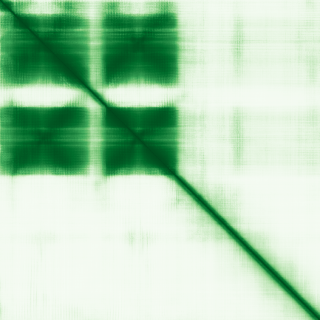
Mean pLDDT
64.9/ 100
Low
433 residues
Confidence breakdown
- Very high(≥ 90)30%
- Confident(70–90)18%
- Low(50–70)4%
- Very low(< 50)48%
Open interactive 3D viewer
AlphaFold (Jumper et al., 2021) · CC BY 4.0
gap junction protein alpha 8
Annotations refreshed 3 months ago.
Diagnostic Grade (Green)
Bilateral congenital or childhood onset cataracts
MONOALLELIC, autosomal or pseudoautosomal, imprinted status unknownDDG2P
MONOALLELIC, autosomal or pseudoautosomal, imprinted status unknownFetal anomalies
MONOALLELIC, autosomal or pseudoautosomal, imprinted status unknownStructural eye disease
MONOALLELIC, autosomal or pseudoautosomal, NOT imprintedCorneal abnormalities
MONOALLELIC, autosomal or pseudoautosomal, imprinted status unknownIntellectual disability
MONOALLELIC, autosomal or pseudoautosomal, imprinted status unknownCataract-microcornea syndrome
cataract - microcornea syndrome
Developmental cataract
hereditary disease
cataract
early-onset nuclear cataract
Total congenital cataract
Cataract with Y-shaped suture opacities
pulverulent cataract
Isolated congenital sclerocornea
Score is the Open Targets composite evidence score (0-1). Higher = stronger gene-disease association.
Gap junction alpha-8 protein
Structural component of eye lens gap junctions (PubMed:18006672, PubMed:19756179). Gap junctions are dodecameric channels that connect the cytoplasm of adjoining cells. They are formed by the docking of two hexameric hemichannels, one from each cell membrane (By similarity). Small molecules and ions diffuse from one cell to a neighboring cell via the central pore (PubMed:18006672, PubMed:19756179)
Curated MONDO disease pages that list GJA8 among their top associated genes.
GJA8 · P48165
Mean pLDDT
64.9/ 100
Low
433 residues
Confidence breakdown
AlphaFold (Jumper et al., 2021) · CC BY 4.0