
AlphaFold predicted structure
GJB6 · O95452
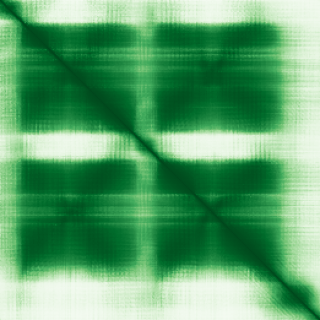
Mean pLDDT
82.2/ 100
Confident
261 residues
Confidence breakdown
- Very high(≥ 90)49%
- Confident(70–90)33%
- Low(50–70)8%
- Very low(< 50)10%
Open interactive 3D viewer
AlphaFold (Jumper et al., 2021) · CC BY 4.0
gap junction protein beta 6
Annotations refreshed 2 months ago.
Diagnostic Grade (Green)
Ectodermal dysplasia
MONOALLELIC, autosomal or pseudoautosomal, imprinted status unknownEctodermal dysplasia without a known gene mutation
MONOALLELIC, autosomal or pseudoautosomal, imprinted status unknownIchthyosis and erythrokeratoderma
MONOALLELIC, autosomal or pseudoautosomal, NOT imprintedMonogenic hearing loss
BOTH monoallelic and biallelic, autosomal or pseudoautosomalPalmoplantar keratoderma and erythrokeratodermas
MONOALLELIC, autosomal or pseudoautosomal, NOT imprintedFamilial Meniere Disease
Clouston syndrome
autosomal recessive nonsyndromic hearing loss 1B
autosomal dominant nonsyndromic hearing loss 3B
hearing loss, autosomal recessive
autosomal recessive nonsyndromic hearing loss 1A
X-linked hypohidrotic ectodermal dysplasia
neurodegenerative disease
X-linked mixed deafness with perilymphatic gusher
X-linked mixed hearing loss with perilymphatic gusher
autosomal dominant nonsyndromic hearing loss
Score is the Open Targets composite evidence score (0-1). Higher = stronger gene-disease association.
Gap junction beta-6 protein
One gap junction consists of a cluster of closely packed pairs of transmembrane channels, the connexons, through which materials of low MW diffuse from one cell to a neighboring cell
GJB6 · O95452
Mean pLDDT
82.2/ 100
Confident
261 residues
Confidence breakdown
AlphaFold (Jumper et al., 2021) · CC BY 4.0