
AlphaFold predicted structure
GLIS2 · Q9BZE0
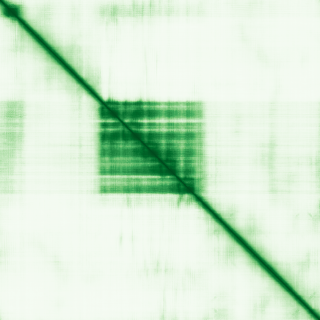
Mean pLDDT
53.9/ 100
Low
524 residues
Confidence breakdown
- Very high(≥ 90)0%
- Confident(70–90)30%
- Low(50–70)9%
- Very low(< 50)61%
Open interactive 3D viewer
AlphaFold (Jumper et al., 2021) · CC BY 4.0
GLIS family zinc finger 2
Annotations refreshed 2 months ago.
Diagnostic Grade (Green)
DDG2P
BIALLELIC, autosomal or pseudoautosomalRenal ciliopathies
BIALLELIC, autosomal or pseudoautosomalRare multisystem ciliopathy disorders
BIALLELIC, autosomal or pseudoautosomalTubulointerstitial kidney disease
BIALLELIC, autosomal or pseudoautosomalChildhood onset dystonia, chorea or related movement disorder
Cystic kidney disease
Fetal anomalies
BIALLELIC, autosomal or pseudoautosomalPrimary ciliary disorders
+3 more panels — install the extension to see the full list inline on any page.
nephronophthisis
Juvenile nephronophthisis
Joubert syndrome 20
acute myeloid leukemia
familial idiopathic steroid-resistant nephrotic syndrome
focal segmental glomerulosclerosis
nephrotic syndrome
Senior-Loken syndrome
Dent disease
tubulointerstitial kidney disease, autosomal dominant, 2
Score is the Open Targets composite evidence score (0-1). Higher = stronger gene-disease association.
Zinc finger protein GLIS2
Can act either as a transcriptional repressor or as a transcriptional activator, depending on the cell context. Acts as a repressor of the Hedgehog signaling pathway (By similarity). Represses the Hedgehog-dependent expression of Wnt4 (By similarity). Necessary to maintain the differentiated epithelial phenotype in renal cells through the inhibition of SNAI1, which itself induces the epithelial-to-mesenchymal transition (By similarity). Represses transcriptional activation mediated by CTNNB1 in the Wnt signaling pathway. May act by recruiting the corepressors CTBP1 and HDAC3. May be involved in neuron differentiation (By similarity)
GLIS2 · Q9BZE0
Mean pLDDT
53.9/ 100
Low
524 residues
Confidence breakdown
AlphaFold (Jumper et al., 2021) · CC BY 4.0