
AlphaFold predicted structure
GNB2 · P62879
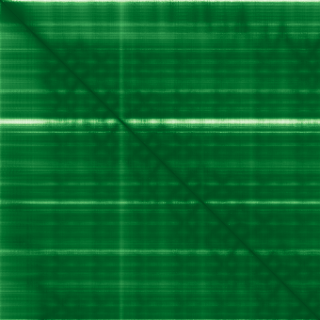
Mean pLDDT
96.9/ 100
Very high
340 residues
Confidence breakdown
- Very high(≥ 90)97%
- Confident(70–90)2%
- Low(50–70)1%
- Very low(< 50)0%
Open interactive 3D viewer
AlphaFold (Jumper et al., 2021) · CC BY 4.0
G protein subunit beta 2
Annotations refreshed 2 months ago.
Diagnostic Grade (Green)
DDG2P
MONOALLELIC, autosomal or pseudoautosomal, imprinted status unknownFetal anomalies
MONOALLELIC, autosomal or pseudoautosomal, NOT imprintedIntellectual disability
MONOALLELIC, autosomal or pseudoautosomal, imprinted status unknownMosaic skin disorders - deep sequencing
MONOALLELIC, autosomal or pseudoautosomal, imprinted status unknownEarly onset or syndromic epilepsy
MONOALLELIC, autosomal or pseudoautosomal, imprinted status unknownneurodevelopmental disorder with hypotonia and dysmorphic facies
familial sick sinus syndrome
complex neurodevelopmental disorder
hereditary disease
Global developmental delay
Sturge-Weber syndrome
inflammatory bowel disease
schizophrenia
colorectal carcinoma
acute myeloid leukemia
Score is the Open Targets composite evidence score (0-1). Higher = stronger gene-disease association.
Guanine nucleotide-binding protein G(I)/G(S)/G(T) subunit beta-2
Guanine nucleotide-binding proteins (G proteins) are involved as a modulator or transducer in various transmembrane signaling systems. The beta and gamma chains are required for the GTPase activity, for replacement of GDP by GTP, and for G protein-effector interaction
GNB2 · P62879
Mean pLDDT
96.9/ 100
Very high
340 residues
Confidence breakdown
AlphaFold (Jumper et al., 2021) · CC BY 4.0