
AlphaFold predicted structure
GNB5 · O14775
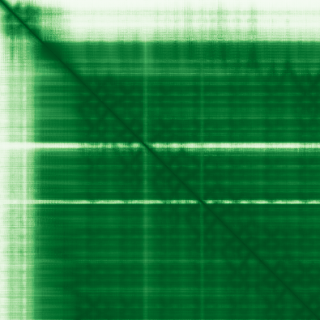
Mean pLDDT
94.0/ 100
Very high
395 residues
Confidence breakdown
- Very high(≥ 90)83%
- Confident(70–90)14%
- Low(50–70)2%
- Very low(< 50)2%
Open interactive 3D viewer
AlphaFold (Jumper et al., 2021) · CC BY 4.0
G protein subunit beta 5
Annotations refreshed 2 months ago.
Diagnostic Grade (Green)
Cardiac arrhythmias - additional genes
BIALLELIC, autosomal or pseudoautosomalDDG2P
BIALLELIC, autosomal or pseudoautosomalEarly onset or syndromic epilepsy
BIALLELIC, autosomal or pseudoautosomalIntellectual disability
BIALLELIC, autosomal or pseudoautosomalFetal anomalies
BIALLELIC, autosomal or pseudoautosomalgnb5-related intellectual disability-cardiac arrhythmia syndrome
language delay and attention deficit-hyperactivity disorder/cognitive impairment with or without cardiac arrhythmia
hereditary disease
Global developmental delay
Abnormality of the cardiovascular system
Abnormality of the nervous system
attention deficit-hyperactivity disorder
Delayed speech and language development
neurodegenerative disease
Fraser syndrome
Score is the Open Targets composite evidence score (0-1). Higher = stronger gene-disease association.
Guanine nucleotide-binding protein subunit beta-5
Enhances GTPase-activating protein (GAP) activity of regulator of G protein signaling (RGS) proteins, such as RGS7 and RGS9, hence involved in the termination of the signaling initiated by the G protein-coupled receptors (GPCRs) by accelerating the GTP hydrolysis on the G-alpha subunits, thereby promoting their inactivation (PubMed:27677260). Increases RGS7 GTPase-activating protein (GAP) activity, thereby regulating mood and cognition (By similarity). Increases RGS9 GTPase-activating protein (GAP) activity, hence contributes to the deactivation of G protein signaling initiated by D(2) dopamine receptors (PubMed:27677260). May play an important role in neuronal signaling, including in the parasympathetic, but not sympathetic, control of heart rate (By similarity)
GNB5 · O14775
Mean pLDDT
94.0/ 100
Very high
395 residues
Confidence breakdown
AlphaFold (Jumper et al., 2021) · CC BY 4.0