
AlphaFold predicted structure
GPAA1 · O43292
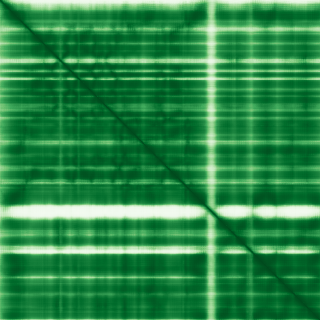
Mean pLDDT
87.3/ 100
Confident
621 residues
Confidence breakdown
- Very high(≥ 90)64%
- Confident(70–90)27%
- Low(50–70)6%
- Very low(< 50)4%
Open interactive 3D viewer
AlphaFold (Jumper et al., 2021) · CC BY 4.0
glycosylphosphatidylinositol anchor attachment 1
Annotations refreshed 3 months ago.
Diagnostic Grade (Green)
Ataxia and cerebellar anomalies - narrow panel
BIALLELIC, autosomal or pseudoautosomalDDG2P
BIALLELIC, autosomal or pseudoautosomalEarly onset or syndromic epilepsy
BIALLELIC, autosomal or pseudoautosomalHereditary ataxia
BIALLELIC, autosomal or pseudoautosomalHereditary ataxia with onset in adulthood
BIALLELIC, autosomal or pseudoautosomalIntellectual disability
BIALLELIC, autosomal or pseudoautosomalAdult onset neurodegenerative disorder
BIALLELIC, autosomal or pseudoautosomalChildhood onset dystonia, chorea or related movement disorder
+1 more panels — install the extension to see the full list inline on any page.
glycosylphosphatidylinositol biosynthesis defect 15
hereditary disease
Global developmental delay
urinary bladder cancer
retinitis pigmentosa
neoplasm
hepatocellular carcinoma
edema
Cone rod dystrophy
gastric cancer
Score is the Open Targets composite evidence score (0-1). Higher = stronger gene-disease association.
GPI-anchor transamidase component GPAA1
Component of the glycosylphosphatidylinositol-anchor (GPI-anchor) transamidase (GPI-T) complex that catalyzes the formation of the linkage between a proprotein and a GPI-anchor and participates in GPI anchored protein biosynthesis (PubMed:11483512, PubMed:29100095, PubMed:34576938, PubMed:35165458, PubMed:35551457, PubMed:37684232, PubMed:9468317). Binds GPI-anchor (PubMed:37684232)
GPAA1 · O43292
Mean pLDDT
87.3/ 100
Confident
621 residues
Confidence breakdown
AlphaFold (Jumper et al., 2021) · CC BY 4.0