
AlphaFold predicted structure
GPR161 · Q8N6U8
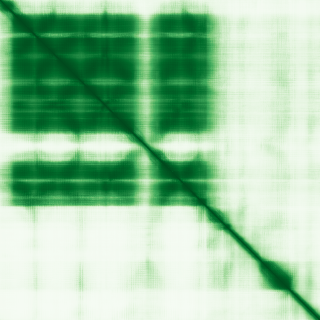
Mean pLDDT
68.6/ 100
Low
529 residues
Confidence breakdown
- Very high(≥ 90)32%
- Confident(70–90)21%
- Low(50–70)17%
- Very low(< 50)30%
Open interactive 3D viewer
AlphaFold (Jumper et al., 2021) · CC BY 4.0
G protein-coupled receptor 161
Annotations refreshed 2 months ago.
Diagnostic Grade (Green)
Childhood solid tumours
MONOALLELIC, autosomal or pseudoautosomal, imprinted status unknownChildhood solid tumours cancer susceptibility
MONOALLELIC, autosomal or pseudoautosomal, NOT imprintedEmbryonal tumour of possible germline origin
MONOALLELIC, autosomal or pseudoautosomal, imprinted status unknownIUGR and IGF abnormalities
BIALLELIC, autosomal or pseudoautosomalMonogenic short stature
BIALLELIC, autosomal or pseudoautosomalPituitary hormone deficiency
BIALLELIC, autosomal or pseudoautosomalmedulloblastoma
pituitary stalk interruption syndrome
prostatitis
early-onset non-syndromic cataract
Prata-Liberal-Goncalves syndrome
Posterior polar cataract
early-onset zonular cataract
Total congenital cataract
retinitis pigmentosa
neural tube defects, folate-sensitive
Score is the Open Targets composite evidence score (0-1). Higher = stronger gene-disease association.
G protein-coupled receptor 161
G protein-coupled receptor that acts as a key inhibitor of the smoothened signaling pathway in primary cilia (PubMed:38326651). Inhibits the smoothened signaling pathway in absence of hedgehog (DHH, IHH or SHH) by promoting formation of the transcription repressor form of GLI2 and GLI3 transcription factors (PubMed:38326651). GPR161 activation triggers signaling via guanine nucleotide-binding protein G(s)/GNAS, mediating activation of adenylate cyclase activity and production of cAMP (PubMed:38326651). Increased cAMP levels activate PKA, promoting PKA-dependent processing of GLI2 and GLI3 transcription factors, leading to formation of transcription repressor GLI2R and GLI3R, which repress expression of target genes (PubMed:38326651). GPR161 also activates PKA by acting as a PKA-anchoring protein, which directly associates with type I PKA regulatory subunits (PRKAR1A and/or PRKAR1B), recruiting PKA followed by PKA-dependent processing of GLI2 and GLI3 transcription factors (PubMed:38326651). In presence of hedgehog, GPR161 is removed from primary cilia by smoothened (SMO), preventing its activity and allowing activation of the smoothened signaling (By similarity). In contrast to the majority of G protein-coupled receptors, it is not activated by a ligand and it either acts as a constitutively active receptor or as a mechanosensitive receptor (PubMed:38326651). Involved in regulation of the smoothened signaling pathway during early neural tube development, forelimb formation, skeletal development, embryonic cerebellar development and forebrain development (By similarity). Involved in the saltatory migration of neurons during brain development by acting as a mechanosensitive receptor that senses mechanical forces generated by fluid shear stress (By similarity)
GPR161 · Q8N6U8
Mean pLDDT
68.6/ 100
Low
529 residues
Confidence breakdown
AlphaFold (Jumper et al., 2021) · CC BY 4.0