
AlphaFold predicted structure
GRHL2 · Q6ISB3
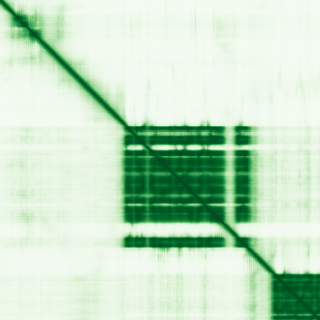
Mean pLDDT
66.9/ 100
Low
625 residues
Confidence breakdown
- Very high(≥ 90)38%
- Confident(70–90)15%
- Low(50–70)5%
- Very low(< 50)42%
Open interactive 3D viewer
AlphaFold (Jumper et al., 2021) · CC BY 4.0
grainyhead like transcription factor 2
Annotations refreshed 2 months ago.
Diagnostic Grade (Green)
Corneal dystrophy
MONOALLELIC, autosomal or pseudoautosomal, NOT imprintedDDG2P
BIALLELIC, autosomal or pseudoautosomalEctodermal dysplasia
BIALLELIC, autosomal or pseudoautosomalMonogenic hearing loss
BOTH monoallelic and biallelic, autosomal or pseudoautosomalFetal anomalies
BIALLELIC, autosomal or pseudoautosomalCongenital fibrosis of the extraocular muscles
Unknownnail and teeth abnormalities-marginal palmoplantar keratoderma-oral hyperpigmentation syndrome
autosomal dominant nonsyndromic hearing loss 28
posterior polymorphous corneal dystrophy
autosomal dominant nonsyndromic hearing loss
breast carcinoma
nonsyndromic genetic hearing loss
neurodegenerative disease
Non-syndromic genetic deafness
corneal dystrophy
stroke disorder
Score is the Open Targets composite evidence score (0-1). Higher = stronger gene-disease association.
Grainyhead-like protein 2 homolog
Transcription factor playing an important role in primary neurulation and in epithelial development (PubMed:25152456, PubMed:29309642). Binds directly to the consensus DNA sequence 5'-AACCGGTT-3' acting as an activator and repressor on distinct target genes (By similarity). During embryogenesis, plays unique and cooperative roles with GRHL3 in establishing distinct zones of primary neurulation. Essential for closure 3 (rostral end of the forebrain), functions cooperatively with GRHL3 in closure 2 (forebrain/midbrain boundary) and posterior neuropore closure (By similarity). Regulates epithelial morphogenesis acting as a target gene-associated transcriptional activator of apical junctional complex components. Up-regulates of CLDN3 and CLDN4, as well as of RAB25, which increases the CLDN4 protein and its localization at tight junctions (By similarity). Comprises an essential component of the transcriptional machinery that establishes appropriate expression levels of CLDN4 and CDH1 in different types of epithelia. Exhibits functional redundancy with GRHL3 in epidermal morphogenetic events and epidermal wound repair (By similarity). In lung, forms a regulatory loop with NKX2-1 that coordinates lung epithelial cell morphogenesis and differentiation (By similarity). In keratinocytes, plays a role in telomerase activation during cellular proliferation, regulates TERT expression by binding to TERT promoter region and inhibiting DNA methylation at the 5'-CpG island, possibly by interfering with DNMT1 enzyme activity (PubMed:19015635, PubMed:20938050). In addition, impairs keratinocyte differentiation and epidermal function by inhibiting the expression of genes clustered at the epidermal differentiation complex (EDC) as well as GRHL1 and GRHL3 through epigenetic mechanisms (PubMed:23254293)
Curated MONDO disease pages that list GRHL2 among their top associated genes.
GRHL2 · Q6ISB3
Mean pLDDT
66.9/ 100
Low
625 residues
Confidence breakdown
AlphaFold (Jumper et al., 2021) · CC BY 4.0