
AlphaFold predicted structure
GRHL3 · Q8TE85
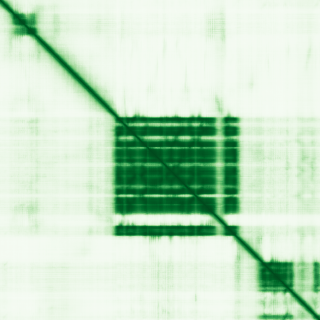
Mean pLDDT
60.7/ 100
Low
626 residues
Confidence breakdown
- Very high(≥ 90)24%
- Confident(70–90)18%
- Low(50–70)11%
- Very low(< 50)48%
Open interactive 3D viewer
AlphaFold (Jumper et al., 2021) · CC BY 4.0
grainyhead like transcription factor 3
Annotations refreshed 2 months ago.
Diagnostic Grade (Green)
Clefting
MONOALLELIC, autosomal or pseudoautosomal, imprinted status unknownDDG2P
MONOALLELIC, autosomal or pseudoautosomal, imprinted status unknownFetal anomalies
MONOALLELIC, autosomal or pseudoautosomal, imprinted status unknownIntellectual disability
MONOALLELIC, autosomal or pseudoautosomal, imprinted status unknownvan der Woude syndrome
cleft palate
isolated cleft palate
hereditary disease
van der Woude syndrome 1
cleft lip
pyelonephritis
hypertrophic cardiomyopathy
neural tube defects, folate-sensitive
isolated spina bifida
Score is the Open Targets composite evidence score (0-1). Higher = stronger gene-disease association.
Grainyhead-like protein 3 homolog
Transcription factor playing important roles in primary neurulation and in the differentiation of stratified epithelia of both ectodermal and endodermal origin (By similarity). Binds directly to the consensus DNA sequence 5'-AACCGGTT-3' acting as an activator and repressor on distinct target genes (PubMed:21081122, PubMed:25347468). xhibits functional redundancy with GRHL2 in epidermal morphogenetic events and epidermal wound repair (By similarity). Exhibits functional redundancy with GRHL2 in epidermal morphogenetic events and epidermal wound repair but is essential to form the epidermal barrier with TGM3 as critical direct target gene among others. Despite being dispensable during normal epidermal homeostasis in the adulthood, is again required for barrier repair after immune-mediated epidermal damage, regulates distinct gene batteries in embryonic epidermal differentiation and adult epidermal barrier reformation after injury. Plays unique and cooperative roles with GRHL2 in establishing distinct zones of primary neurulation. Essential for spinal closure, functions cooperatively with GRHL2 in closure 2 (forebrain/midbrain boundary) and posterior neuropore closure (By similarity). Also required for proper development of the oral periderm (PubMed:24360809). No genetic interaction with GRHL3, no functional cooperativity due to diverse target gene selectivity (PubMed:21081122)
GRHL3 · Q8TE85
Mean pLDDT
60.7/ 100
Low
626 residues
Confidence breakdown
AlphaFold (Jumper et al., 2021) · CC BY 4.0