
AlphaFold predicted structure
GRIA2 · P42262
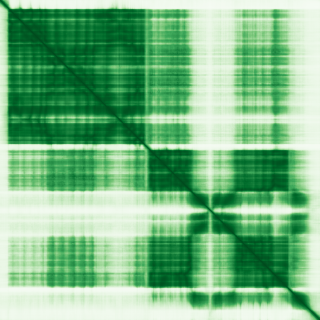
Mean pLDDT
84.9/ 100
Confident
883 residues
Confidence breakdown
- Very high(≥ 90)61%
- Confident(70–90)26%
- Low(50–70)4%
- Very low(< 50)9%
Open interactive 3D viewer
AlphaFold (Jumper et al., 2021) · CC BY 4.0
glutamate ionotropic receptor AMPA type subunit 2
Annotations refreshed 2 months ago.
Diagnostic Grade (Green)
DDG2P
MONOALLELIC, autosomal or pseudoautosomal, imprinted status unknownEarly onset or syndromic epilepsy
MONOALLELIC, autosomal or pseudoautosomal, imprinted status unknownIntellectual disability
MONOALLELIC, autosomal or pseudoautosomal, NOT imprintedneurodevelopmental disorder with language impairment and behavioral abnormalities
epilepsy
migraine disorder
alcohol dependence
Seizure
Lennox-Gastaut syndrome
focal epilepsy
diabetic neuropathy
obesity disorder
Obesity
Score is the Open Targets composite evidence score (0-1). Higher = stronger gene-disease association.
Glutamate receptor 2
Ionotropic glutamate receptor that functions as a ligand-gated cation channel, gated by L-glutamate and glutamatergic agonists such as alpha-amino-3-hydroxy-5-methyl-4-isoxazolepropionic acid (AMPA), quisqualic acid, and kainic acid (PubMed:20614889, PubMed:31300657, PubMed:8003671). L-glutamate acts as an excitatory neurotransmitter at many synapses in the central nervous system and plays an important role in fast excitatory synaptic transmission (PubMed:14687553). Binding of the excitatory neurotransmitter L-glutamate induces a conformation change, leading to the opening of the cation channel, and thereby converts the chemical signal to an electrical impulse upon entry of monovalent and divalent cations such as sodium and calcium (PubMed:20614889, PubMed:8003671). The receptor then desensitizes rapidly and enters in a transient inactive state, characterized by the presence of bound agonist (By similarity). In the presence of CACNG4 or CACNG7 or CACNG8, shows resensitization which is characterized by a delayed accumulation of current flux upon continued application of L-glutamate (By similarity). Through complex formation with NSG1, GRIP1 and STX12 controls the intracellular fate of AMPAR and the endosomal sorting of the GRIA2 subunit toward recycling and membrane targeting (By similarity)
GRIA2 · P42262
Mean pLDDT
84.9/ 100
Confident
883 residues
Confidence breakdown
AlphaFold (Jumper et al., 2021) · CC BY 4.0