Skip to content
GenoLensGenoLens

GRIK2

Chr 6q16.3

glutamate ionotropic receptor kainate type subunit 2

Aliases:
GluK2, MRT6, GluR-6, EAA4, GLUK6
MANE:
ENST00000369134.9

Annotations refreshed 1 month ago.

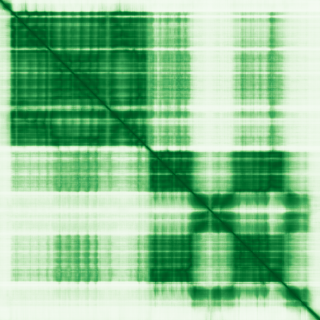
Predicted protein structure

Clinical relevance (Genomics England PanelApp)

Diagnostic Grade (Green)

  • DDG2P

    BOTH monoallelic and biallelic, autosomal or pseudoautosomal
  • Early onset or syndromic epilepsy

    BOTH monoallelic and biallelic, autosomal or pseudoautosomal
  • Intellectual disability

    BOTH monoallelic and biallelic, autosomal or pseudoautosomal
  • Fetal anomalies

    BIALLELIC, autosomal or pseudoautosomal

Disease associations (Open Targets)

  • neurodevelopmental disorder with impaired language and ataxia and with or without seizures

    0.68
  • intellectual disability, autosomal recessive 6

    0.67
  • Seizure

    0.63
  • epilepsy

    0.61
  • migraine disorder

    0.59
  • alcohol dependence

    0.57
  • autosomal recessive non-syndromic intellectual disability

    0.55
  • Lennox-Gastaut syndrome

    0.53
  • complex neurodevelopmental disorder

    0.51
  • Intellectual disability

    0.47

Score is the Open Targets composite evidence score (0-1). Higher = stronger gene-disease association.

Protein function (UniProt)

Glutamate receptor ionotropic, kainate 2

Ionotropic glutamate receptor that functions as a cation-permeable ligand-gated ion channel, gated by L-glutamate and the glutamatergic agonist kainic acid (PubMed:7536611, PubMed:8730589, PubMed:14511640). L-glutamate acts as an excitatory neurotransmitter at many synapses in the central nervous system (By similarity). Binding of the excitatory neurotransmitter L-glutamate induces a conformational change leading to the opening of the cation channel, converting the chemical signal to an electrical impulse (By similarity). The receptor then desensitizes rapidly and enters a transient inactive state, characterized by the presence of bound agonist (PubMed:14511640, PubMed:28180184, PubMed:34375587, PubMed:7536611, PubMed:8730589). Modulates cell surface expression of NETO2 (By similarity). In association with GRIK3, involved in presynaptic facilitation of glutamate release at hippocampal mossy fiber synapses (By similarity)

Curated MONDO disease pages that list GRIK2 among their top associated genes.

Data sources: HGNC (CC BY 4.0), AlphaFold (CC BY 4.0, Jumper et al. Nature 2021), Genomics England PanelApp (CC BY 4.0), ClinGen, Open Targets (CC0), UniProt.

Not for sole clinical decision-making. Always verify against primary sources.