
AlphaFold predicted structure
GRIN2D · O15399
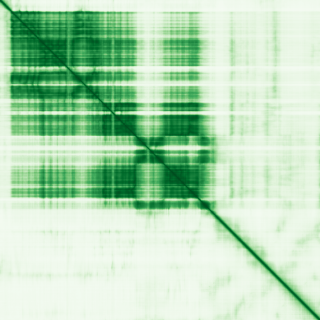
Mean pLDDT
63.2/ 100
Low
1,336 residues
Confidence breakdown
- Very high(≥ 90)15%
- Confident(70–90)37%
- Low(50–70)9%
- Very low(< 50)40%
Open interactive 3D viewer
AlphaFold (Jumper et al., 2021) · CC BY 4.0
glutamate ionotropic receptor NMDA type subunit 2D
Annotations refreshed 2 months ago.
Diagnostic Grade (Green)
DDG2P
MONOALLELIC, autosomal or pseudoautosomal, imprinted status unknownEarly onset or syndromic epilepsy
MONOALLELIC, autosomal or pseudoautosomal, imprinted status unknownIntellectual disability
MONOALLELIC, autosomal or pseudoautosomal, imprinted status unknownFetal anomalies
MONOALLELIC, autosomal or pseudoautosomal, imprinted status unknowndevelopmental and epileptic encephalopathy, 46
Alzheimer disease
Parkinson disease
influenza
infection
depressive disorder
major depressive disorder
alcohol dependence
dementia
cerebral atherosclerosis
Score is the Open Targets composite evidence score (0-1). Higher = stronger gene-disease association.
Glutamate receptor ionotropic, NMDA 2D
Component of N-methyl-D-aspartate (NMDA) receptors (NMDARs) that function as heterotetrameric, ligand-gated cation channels with high calcium permeability and voltage-dependent block by Mg(2+) (PubMed:26875626, PubMed:27616483, PubMed:28126851, PubMed:9489750). Participates in synaptic plasticity for learning and memory formation (By similarity). Channel activation requires binding of the neurotransmitter L-glutamate to the GluN2 subunit, glycine or D-serine binding to the GluN1 subunit, plus membrane depolarization to eliminate channel inhibition by Mg(2+) (PubMed:26875626, PubMed:27616483, PubMed:28126851, PubMed:9489750). NMDARs mediate simultaneously the potassium efflux and the influx of calcium and sodium (By similarity). Each GluN2 subunit confers differential attributes to channel properties, including activation, deactivation and desensitization kinetics, pH sensitivity, Ca2(+) permeability, and binding to allosteric modulators (PubMed:26875626, PubMed:28095420, PubMed:28126851, PubMed:9489750)
Curated MONDO disease pages that list GRIN2D among their top associated genes.
GRIN2D · O15399
Mean pLDDT
63.2/ 100
Low
1,336 residues
Confidence breakdown
AlphaFold (Jumper et al., 2021) · CC BY 4.0