
AlphaFold predicted structure
GRN · P28799
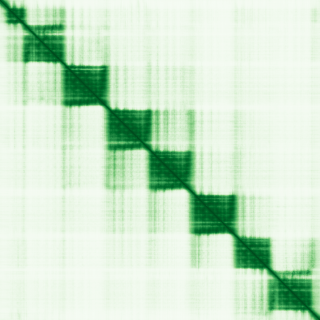
Mean pLDDT
77.0/ 100
Confident
593 residues
Confidence breakdown
- Very high(≥ 90)21%
- Confident(70–90)58%
- Low(50–70)7%
- Very low(< 50)14%
Open interactive 3D viewer
AlphaFold (Jumper et al., 2021) · CC BY 4.0
granulin precursor
Annotations refreshed 3 months ago.
Diagnostic Grade (Green)
Adult onset dystonia, chorea or related movement disorder
MONOALLELIC, autosomal or pseudoautosomal, imprinted status unknownAdult onset neurodegenerative disorder
BOTH monoallelic and biallelic, autosomal or pseudoautosomalAtaxia and cerebellar anomalies - narrow panel
BIALLELIC, autosomal or pseudoautosomalEarly onset dementia (encompassing fronto-temporal dementia and prion disease)
MONOALLELIC, autosomal or pseudoautosomal, imprinted status unknownEarly onset or syndromic epilepsy
BIALLELIC, autosomal or pseudoautosomalHereditary ataxia with onset in adulthood
BIALLELIC, autosomal or pseudoautosomalLikely inborn error of metabolism
BIALLELIC, autosomal or pseudoautosomalNeuronal ceroid lipofuscinosis
BIALLELIC, autosomal or pseudoautosomal+7 more panels — install the extension to see the full list inline on any page.
neuronal ceroid lipofuscinosis 11
GRN-related frontotemporal lobar degeneration with Tdp43 inclusions
CLN11 disease
frontotemporal dementia
adult neuronal ceroid lipofuscinosis
Alzheimer disease
dementia
hereditary disease
amyotrophic lateral sclerosis
neuronal ceroid lipofuscinosis
Score is the Open Targets composite evidence score (0-1). Higher = stronger gene-disease association.
Progranulin
Secreted protein that acts as a key regulator of lysosomal function and as a growth factor involved in inflammation, wound healing and cell proliferation (PubMed:12526812, PubMed:18378771, PubMed:28073925, PubMed:28453791, PubMed:28541286). Regulates protein trafficking to lysosomes, and also the activity of lysosomal enzymes (PubMed:28453791, PubMed:28541286). Also facilitates the acidification of lysosomes, causing degradation of mature CTSD by CTSB (PubMed:28073925). In addition, functions as a wound-related growth factor that acts directly on dermal fibroblasts and endothelial cells to promote division, migration and the formation of capillary-like tubule structures (By similarity). Also promotes epithelial cell proliferation by blocking TNF-mediated neutrophil activation preventing release of oxidants and proteases (PubMed:12526812). Moreover, modulates inflammation in neurons by preserving neurons survival, axonal outgrowth and neuronal integrity (PubMed:18378771)
GRN · P28799
Mean pLDDT
77.0/ 100
Confident
593 residues
Confidence breakdown
AlphaFold (Jumper et al., 2021) · CC BY 4.0