Skip to content
GenoLensGenoLens

GSPT2

Chr Xp11.22

G1 to S phase transition 2

Aliases:
eRF3b, FLJ10441
MANE:
ENST00000340438.6

Annotations refreshed 9 hours ago.

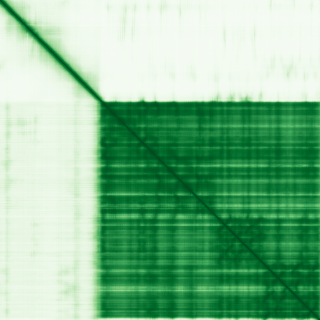
Predicted protein structure

Clinical relevance (Genomics England PanelApp)

Moderate Evidence (Amber)

  • Fetal anomalies

    X-LINKED: hemizygous mutation in males, biallelic mutations in females
  • DDG2P

    X-LINKED: hemizygous mutation in males, biallelic mutations in females
  • Intellectual disability

    X-LINKED: hemizygous mutation in males, biallelic mutations in females

Disease associations (Open Targets)

  • autism

    0.33
  • Seizure

    0.33
  • Delayed speech and language development

    0.33
  • cancer

    0.12
  • hepatocellular carcinoma

    0.04
  • endometrial cancer

    0.04
  • spinal muscular atrophy

    0.03
  • neoplasm

    0.03
  • laryngotracheoesophageal cleft

    0.03
  • Atrophy/Degeneration affecting the central nervous system

    0.03

Score is the Open Targets composite evidence score (0-1). Higher = stronger gene-disease association.

Protein function (UniProt)

Eukaryotic peptide chain release factor GTP-binding subunit ERF3B

GTPase component of the eRF1-eRF3-GTP ternary complex, a ternary complex that mediates translation termination in response to the termination codons UAA, UAG and UGA (PubMed:11524954, PubMed:15987998, PubMed:17562865). GSPT2/ERF3B mediates ETF1/ERF1 delivery to stop codons: The eRF1-eRF3-GTP complex binds to a stop codon in the ribosomal A-site (PubMed:15987998). GTP hydrolysis by GSPT2/ERF3B induces a conformational change that leads to its dissociation, permitting ETF1/ERF1 to accommodate fully in the A-site (PubMed:15987998). Component of the transient SURF complex which recruits UPF1 to stalled ribosomes in the context of nonsense-mediated decay (NMD) of mRNAs containing premature stop codons (PubMed:19417104)

Data sources: HGNC (CC BY 4.0), AlphaFold (CC BY 4.0, Jumper et al. Nature 2021), Genomics England PanelApp (CC BY 4.0), ClinGen, Open Targets (CC0), UniProt.

Not for sole clinical decision-making. Always verify against primary sources.