
AlphaFold predicted structure
GTF2I · P78347
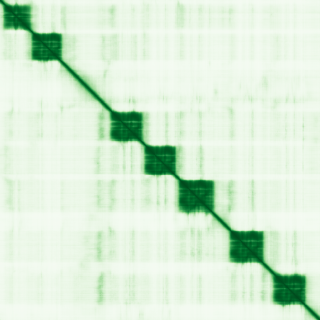
Mean pLDDT
68.4/ 100
Low
998 residues
Confidence breakdown
- Very high(≥ 90)28%
- Confident(70–90)31%
- Low(50–70)5%
- Very low(< 50)35%
Open interactive 3D viewer
AlphaFold (Jumper et al., 2021) · CC BY 4.0
general transcription factor IIi
Annotations refreshed 2 months ago.
Moderate Evidence (Amber)
Intellectual disability
MONOALLELIC, autosomal or pseudoautosomal, NOT imprintedneurodegenerative disease
type 2 diabetes mellitus
atrial fibrillation
Abnormality of the skeletal system
hypertensive disorder
systemic lupus erythematosus
essential hypertension
heart failure
thymic carcinoma
inflammatory bowel disease
Score is the Open Targets composite evidence score (0-1). Higher = stronger gene-disease association.
General transcription factor II-I
Interacts with the basal transcription machinery by coordinating the formation of a multiprotein complex at the C-FOS promoter, and linking specific signal responsive activator complexes. Promotes the formation of stable high-order complexes of SRF and PHOX1 and interacts cooperatively with PHOX1 to promote serum-inducible transcription of a reporter gene deriven by the C-FOS serum response element (SRE). Acts as a coregulator for USF1 by binding independently two promoter elements, a pyrimidine-rich initiator (Inr) and an upstream E-box. Required for the formation of functional ARID3A DNA-binding complexes and for activation of immunoglobulin heavy-chain transcription upon B-lymphocyte activation
GTF2I · P78347
Mean pLDDT
68.4/ 100
Low
998 residues
Confidence breakdown
AlphaFold (Jumper et al., 2021) · CC BY 4.0