AlphaFold predicted structure
GTPBP3 · Q969Y2
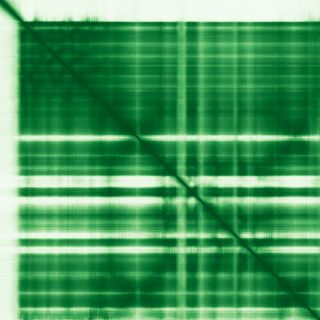
Mean pLDDT
81.9/ 100
Confident
492 residues
Confidence breakdown
- Very high(≥ 90)55%
- Confident(70–90)25%
- Low(50–70)8%
- Very low(< 50)12%
AlphaFold (Jumper et al., 2021) · CC BY 4.0
GTP binding protein 3, mitochondrial
Annotations refreshed 1 month ago.
Diagnostic Grade (Green)
DDG2P
BIALLELIC, autosomal or pseudoautosomalFetal anomalies
BIALLELIC, autosomal or pseudoautosomalIntellectual disability
BIALLELIC, autosomal or pseudoautosomalLikely inborn error of metabolism
BIALLELIC, autosomal or pseudoautosomalMitochondrial disorders
BIALLELIC, autosomal or pseudoautosomalPossible mitochondrial disorder - nuclear genes
BIALLELIC, autosomal or pseudoautosomalUndiagnosed metabolic disorders
BIALLELIC, autosomal or pseudoautosomalEarly onset or syndromic epilepsy
BIALLELIC, autosomal or pseudoautosomal+1 more panels — install the extension to see the full list inline on any page.
Combined oxidative phosphorylation defect type 23
neurodegenerative disease
hereditary disease
mitochondrial disease
inborn mitochondrial metabolism disorder
Leigh syndrome
hypertrophic cardiomyopathy
pneumoconiosis
macular holes
wet macular degeneration
Score is the Open Targets composite evidence score (0-1). Higher = stronger gene-disease association.
5-taurinomethyluridine-[tRNA] synthase subunit GTPB3, mitochondrial
GTPase component of the GTPBP3-MTO1 complex that catalyzes the 5-taurinomethyluridine (taum(5)U) modification at the 34th wobble position (U34) of mitochondrial tRNAs (mt-tRNAs), which plays a role in mt-tRNA decoding and mitochondrial translation (PubMed:29390138, PubMed:33619562). Taum(5)U formation on mammalian mt-tRNA requires the presence of both GTPBP3-mediated GTPase activity and MTO1 catalytic activity (PubMed:29390138)
GTPBP3 · Q969Y2

Mean pLDDT
81.9/ 100
Confident
492 residues
Confidence breakdown
AlphaFold (Jumper et al., 2021) · CC BY 4.0