
AlphaFold predicted structure
HDAC3 · O15379
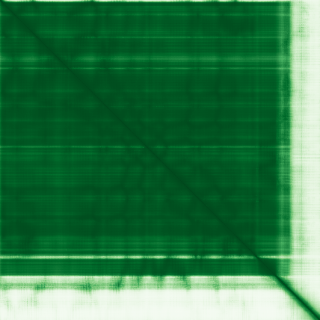
Mean pLDDT
90.8/ 100
Very high
428 residues
Confidence breakdown
- Very high(≥ 90)85%
- Confident(70–90)4%
- Low(50–70)2%
- Very low(< 50)10%
Open interactive 3D viewer
AlphaFold (Jumper et al., 2021) · CC BY 4.0
histone deacetylase 3
Annotations refreshed 3 months ago.
Diagnostic Grade (Green)
DDG2P
MONOALLELIC, autosomal or pseudoautosomal, imprinted status unknownFetal anomalies
MONOALLELIC, autosomal or pseudoautosomal, imprinted status unknownIntellectual disability
MONOALLELIC, autosomal or pseudoautosomal, NOT imprintedplasma cell myeloma
neoplasm
primary cutaneous T-cell non-Hodgkin lymphoma
neurodegenerative disease
Duchenne muscular dystrophy
T-cell non-Hodgkin lymphoma
peripheral T-cell lymphoma, not otherwise specified
neurodevelopmental disorder
mature T-cell and NK-cell non-Hodgkin lymphoma
breast cancer
Score is the Open Targets composite evidence score (0-1). Higher = stronger gene-disease association.
Histone deacetylase 3
Histone deacetylase that catalyzes the deacetylation of lysine residues on the N-terminal part of the core histones (H2A, H2B, H3 and H4), and some other non-histone substrates (PubMed:21030595, PubMed:21444723, PubMed:23911289, PubMed:25301942, PubMed:28167758, PubMed:28497810, PubMed:32404892, PubMed:22230954). Histone deacetylation gives a tag for epigenetic repression and plays an important role in transcriptional regulation, cell cycle progression and developmental events (PubMed:23911289). Histone deacetylases act via the formation of large multiprotein complexes, such as N-Cor repressor complex, which activate the histone deacetylase activity (PubMed:23911289, PubMed:22230954). Participates in the BCL6 transcriptional repressor activity by deacetylating the H3 'Lys-27' (H3K27) on enhancer elements, antagonizing EP300 acetyltransferase activity and repressing proximal gene expression (PubMed:23911289). Acts as a molecular chaperone for shuttling phosphorylated NR2C1 to PML bodies for sumoylation (By similarity). Contributes, together with XBP1 isoform 1, to the activation of NFE2L2-mediated HMOX1 transcription factor gene expression in a PI(3)K/mTORC2/Akt-dependent signaling pathway leading to endothelial cell (EC) survival under disturbed flow/oxidative stress (PubMed:25190803). Regulates both the transcriptional activation and repression phases of the circadian clock in a deacetylase activity-independent manner (By similarity). During the activation phase, promotes the accumulation of ubiquitinated BMAL1 at the E-boxes and during the repression phase, blocks FBXL3-mediated CRY1/2 ubiquitination and promotes the interaction of CRY1 and BMAL1 (By similarity). The NCOR1-HDAC3 complex regulates the circadian expression of the core clock gene BMAL1 and the genes involved in lipid metabolism in the liver (By similarity). Also functions as a deacetylase for non-histone targets, such as KAT5, MEF2D, MAPK14, RARA and STAT3 (PubMed:15653507, PubMed:21030595, PubMed:21444723, PubMed:25301942, PubMed:28167758). Serves as a corepressor of RARA, mediating its deacetylation and repression, leading to inhibition of RARE DNA element binding (PubMed:28167758). In association with RARA, plays a role in the repression of microRNA-10a and thereby in the inflammatory response (PubMed:28167758). In addition to protein deacetylase activity, also acts as a protein-lysine deacylase by recognizing other acyl groups: catalyzes removal of (2E)-butenoyl (crotonyl), lactoyl (lactyl), 2-hydroxyisobutanoyl (2-hydroxyisobutyryl) and isonicotinyl acyl groups from lysine residues, leading to protein decrotonylation, delactylation, de-2-hydroxyisobutyrylation and deisonicotinylation, respectively (PubMed:28497810, PubMed:29192674, PubMed:34608293, PubMed:34545082, PubMed:35044827). Catalyzes decrotonylation of MAPRE1/EB1 (PubMed:34608293). Mediates delactylation NBN/NBS1, thereby inhibiting DNA double-strand breaks (DSBs) via homologous recombination (HR) (PubMed:38961290)
HDAC3 · O15379
Mean pLDDT
90.8/ 100
Very high
428 residues
Confidence breakdown
AlphaFold (Jumper et al., 2021) · CC BY 4.0