
AlphaFold predicted structure
HECTD1 · Q9ULT8
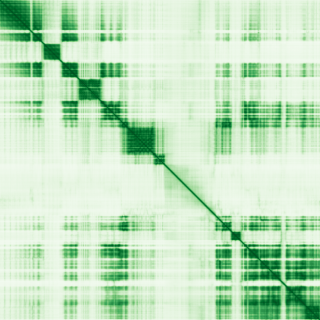
Mean pLDDT
68.1/ 100
Low
2,610 residues
Confidence breakdown
- Very high(≥ 90)15%
- Confident(70–90)49%
- Low(50–70)9%
- Very low(< 50)27%
Open interactive 3D viewer
AlphaFold (Jumper et al., 2021) · CC BY 4.0
HECT domain E3 ubiquitin protein ligase 1
Annotations refreshed 3 months ago.
Moderate Evidence (Amber)
Fetal anomalies
BOTH monoallelic and biallelic, autosomal or pseudoautosomalneurodegenerative disease
Intellectual disability
respiratory tract infectious disorder
spontaneous preterm birth
stroke disorder
alcohol drinking
Alzheimer disease
neurodevelopmental disorder
familial thoracic aortic aneurysm and aortic dissection
Heterotaxia
Score is the Open Targets composite evidence score (0-1). Higher = stronger gene-disease association.
E3 ubiquitin-protein ligase HECTD1
E3 ubiquitin-protein ligase which accepts ubiquitin from an E2 ubiquitin-conjugating enzyme in the form of a thioester and then directly transfers the ubiquitin to targeted substrates (PubMed:33711283). Mediates 'Lys-63'-linked polyubiquitination of HSP90AA1 which leads to its intracellular localization and reduced secretion (By similarity). Negatively regulating HSP90AA1 secretion in cranial mesenchyme cells may impair their emigration and may be essential for the correct development of the cranial neural folds and neural tube closure (By similarity). Catalyzes ubiquitination and degradation of ZNF622, an assembly factor for the ribosomal 60S subunit, in hematopoietic cells, thereby promoting hematopoietic stem cell renewal (PubMed:33711283)
HECTD1 · Q9ULT8
Mean pLDDT
68.1/ 100
Low
2,610 residues
Confidence breakdown
AlphaFold (Jumper et al., 2021) · CC BY 4.0