
AlphaFold predicted structure
HMBS · P08397
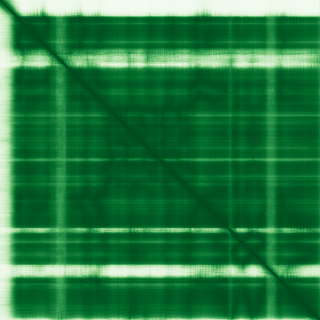
Mean pLDDT
90.1/ 100
Very high
361 residues
Confidence breakdown
- Very high(≥ 90)79%
- Confident(70–90)9%
- Low(50–70)9%
- Very low(< 50)4%
Open interactive 3D viewer
AlphaFold (Jumper et al., 2021) · CC BY 4.0
hydroxymethylbilane synthase
Annotations refreshed 3 months ago.
Diagnostic Grade (Green)
Acute intermittent porphyria
BOTH monoallelic and biallelic (but BIALLELIC mutations cause a more SEVERE disease form), autosomal or pseudoautosomalAtaxia and cerebellar anomalies - narrow panel
BIALLELIC, autosomal or pseudoautosomalBilateral congenital or childhood onset cataracts
BIALLELIC, autosomal or pseudoautosomalChildhood onset hereditary spastic paraplegia
BIALLELIC, autosomal or pseudoautosomalHereditary neuropathy
MONOALLELIC, autosomal or pseudoautosomal, NOT imprintedHereditary neuropathy or pain disorder
BOTH monoallelic and biallelic (but BIALLELIC mutations cause a more SEVERE disease form), autosomal or pseudoautosomalLikely inborn error of metabolism
BOTH monoallelic and biallelic (but BIALLELIC mutations cause a more SEVERE disease form), autosomal or pseudoautosomalNon-acute porphyrias
BOTH monoallelic and biallelic, autosomal or pseudoautosomal+5 more panels — install the extension to see the full list inline on any page.
acute intermittent porphyria
encephalopathy, porphyria-related
leukoencephalopathy, porphyria-related
neurodegenerative disease
Leukoencephalopathy
coronary artery disorder
Abdominal pain
aceruloplasminemia
cerebellar ataxia
hereditary peripheral neuropathy
Score is the Open Targets composite evidence score (0-1). Higher = stronger gene-disease association.
Porphobilinogen deaminase
As part of the heme biosynthetic pathway, catalyzes the sequential polymerization of four molecules of porphobilinogen to form hydroxymethylbilane, also known as preuroporphyrinogen (PubMed:18004775, PubMed:18936296, PubMed:19138865, PubMed:23815679). Catalysis begins with the assembly of the dipyrromethane cofactor by the apoenzyme from two molecules of porphobilinogen or from preuroporphyrinogen. The covalently linked cofactor acts as a primer, around which the tetrapyrrole product is assembled (PubMed:18936296). In the last step of catalysis, the product, preuroporphyrinogen, is released, leaving the cofactor bound to the holodeaminase intact (PubMed:18936296)
HMBS · P08397
Mean pLDDT
90.1/ 100
Very high
361 residues
Confidence breakdown
AlphaFold (Jumper et al., 2021) · CC BY 4.0