AlphaFold predicted structure
HNRNPC · P07910
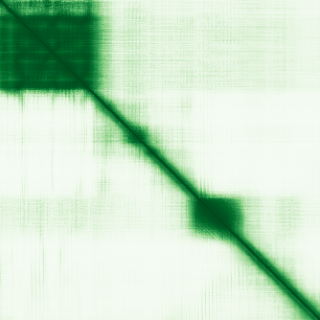
Mean pLDDT
70.4/ 100
Confident
306 residues
Confidence breakdown
- Very high(≥ 90)32%
- Confident(70–90)10%
- Low(50–70)42%
- Very low(< 50)17%
AlphaFold (Jumper et al., 2021) · CC BY 4.0
heterogeneous nuclear ribonucleoprotein C
Annotations refreshed 1 month ago.
Diagnostic Grade (Green)
Intellectual disability
MONOALLELIC, autosomal or pseudoautosomal, NOT imprintedStructural eye disease
MONOALLELIC, autosomal or pseudoautosomal, NOT imprintedintellectual developmental disorder, autosomal dominant 74
complex neurodevelopmental disorder
dengue disease
neurodegenerative disease
hereditary disease
microphthalmia, isolated, with coloboma
neoplasm
cancer
non-small cell lung carcinoma
hepatocellular carcinoma
Score is the Open Targets composite evidence score (0-1). Higher = stronger gene-disease association.
Heterogeneous nuclear ribonucleoproteins C1/C2
Binds pre-mRNA and nucleates the assembly of 40S hnRNP particles (PubMed:8264621). Interacts with poly-U tracts in the 3'-UTR or 5'-UTR of mRNA and modulates the stability and the level of translation of bound mRNA molecules (PubMed:12509468, PubMed:16010978, PubMed:7567451, PubMed:8264621). Single HNRNPC tetramers bind 230-240 nucleotides. Trimers of HNRNPC tetramers bind 700 nucleotides (PubMed:8264621). May play a role in the early steps of spliceosome assembly and pre-mRNA splicing. N6-methyladenosine (m6A) has been shown to alter the local structure in mRNAs and long non-coding RNAs (lncRNAs) via a mechanism named 'm(6)A-switch', facilitating binding of HNRNPC, leading to regulation of mRNA splicing (PubMed:25719671)
HNRNPC · P07910

Mean pLDDT
70.4/ 100
Confident
306 residues
Confidence breakdown
AlphaFold (Jumper et al., 2021) · CC BY 4.0