
AlphaFold predicted structure
HNRNPH1 · P31943
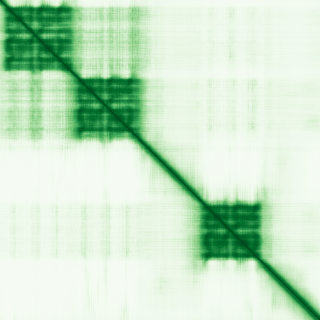
Mean pLDDT
61.9/ 100
Low
449 residues
Confidence breakdown
- Very high(≥ 90)0%
- Confident(70–90)50%
- Low(50–70)11%
- Very low(< 50)40%
Open interactive 3D viewer
AlphaFold (Jumper et al., 2021) · CC BY 4.0
heterogeneous nuclear ribonucleoprotein H1
Annotations refreshed 2 months ago.
Diagnostic Grade (Green)
Childhood onset dystonia, chorea or related movement disorder
MONOALLELIC, autosomal or pseudoautosomal, imprinted status unknownDDG2P
MONOALLELIC, autosomal or pseudoautosomal, imprinted status unknownFetal anomalies
MONOALLELIC, autosomal or pseudoautosomal, NOT imprintedIntellectual disability
MONOALLELIC, autosomal or pseudoautosomal, NOT imprintedneurodevelopmental disorder with craniofacial dysmorphism and skeletal defects
dengue disease
hereditary disease
neurodevelopmental disorder
syndromic intellectual disability
intellectual disability, X-linked, syndromic, Bain type
vertebral column disorder
arthropathy
corneal ulcer
neoplasm
Score is the Open Targets composite evidence score (0-1). Higher = stronger gene-disease association.
Heterogeneous nuclear ribonucleoprotein H
This protein is a component of the heterogeneous nuclear ribonucleoprotein (hnRNP) complexes which provide the substrate for the processing events that pre-mRNAs undergo before becoming functional, translatable mRNAs in the cytoplasm. Mediates pre-mRNA alternative splicing regulation. Inhibits, together with CUGBP1, insulin receptor (IR) pre-mRNA exon 11 inclusion in myoblast. Binds to the IR RNA. Binds poly(RG)
HNRNPH1 · P31943
Mean pLDDT
61.9/ 100
Low
449 residues
Confidence breakdown
AlphaFold (Jumper et al., 2021) · CC BY 4.0