
AlphaFold predicted structure
HNRNPK · P61978
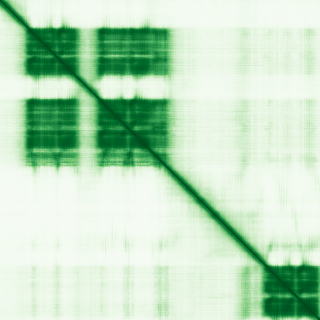
Mean pLDDT
64.4/ 100
Low
463 residues
Confidence breakdown
- Very high(≥ 90)9%
- Confident(70–90)40%
- Low(50–70)10%
- Very low(< 50)41%
Open interactive 3D viewer
AlphaFold (Jumper et al., 2021) · CC BY 4.0
heterogeneous nuclear ribonucleoprotein K
Annotations refreshed 3 months ago.
Diagnostic Grade (Green)
Clefting
MONOALLELIC, autosomal or pseudoautosomal, NOT imprintedDDG2P
MONOALLELIC, autosomal or pseudoautosomal, imprinted status unknownFetal anomalies
MONOALLELIC, autosomal or pseudoautosomal, imprinted status unknownIntellectual disability
MONOALLELIC, autosomal or pseudoautosomal, NOT imprintedRare syndromic craniosynostosis or isolated multisuture synostosis
MONOALLELIC, autosomal or pseudoautosomal, NOT imprintedLimb disorders
Skeletal dysplasia
MONOALLELIC, autosomal or pseudoautosomal, NOT imprintedThoracic aortic aneurysm or dissection
MONOALLELIC, autosomal or pseudoautosomal, NOT imprinted+1 more panels — install the extension to see the full list inline on any page.
Au-Kline syndrome
neurodevelopmental disorder-craniofacial dysmorphism-cardiac defect-hip dysplasia syndrome
hereditary disease
neurodegenerative disease
dengue disease
Intellectual disability
viral infectious disease
infectious disease
neonatal encephalopathy
Generalized hypotonia
Score is the Open Targets composite evidence score (0-1). Higher = stronger gene-disease association.
Heterogeneous nuclear ribonucleoprotein K
One of the major pre-mRNA-binding proteins. Binds tenaciously to poly(C) sequences. Likely to play a role in the nuclear metabolism of hnRNAs, particularly for pre-mRNAs that contain cytidine-rich sequences. Can also bind poly(C) single-stranded DNA. Plays an important role in p53/TP53 response to DNA damage, acting at the level of both transcription activation and repression. When sumoylated, acts as a transcriptional coactivator of p53/TP53, playing a role in p21/CDKN1A and 14-3-3 sigma/SFN induction. As far as transcription repression is concerned, acts by interacting with long intergenic RNA p21 (lincRNA-p21), a non-coding RNA induced by p53/TP53. This interaction is necessary for the induction of apoptosis, but not cell cycle arrest. As part of a ribonucleoprotein complex composed at least of ZNF827, HNRNPL and the circular RNA circZNF827 that nucleates the complex on chromatin, may negatively regulate the transcription of genes involved in neuronal differentiation (PubMed:33174841)
HNRNPK · P61978
Mean pLDDT
64.4/ 100
Low
463 residues
Confidence breakdown
AlphaFold (Jumper et al., 2021) · CC BY 4.0