Skip to content
GenoLensGenoLens

HSD17B4

Chr 5q23.1

hydroxysteroid 17-beta dehydrogenase 4

Aliases:
MFE-2, DBP, SDR8C1
MANE:
ENST00000510025.7

Annotations refreshed 1 month ago.

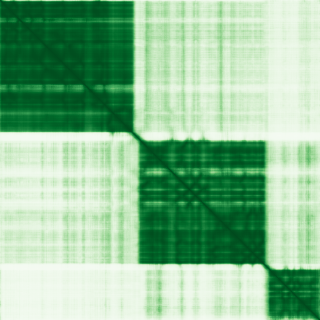
Predicted protein structure

Clinical relevance (Genomics England PanelApp)

Diagnostic Grade (Green)

  • DDG2P

    BIALLELIC, autosomal or pseudoautosomal
  • Early onset or syndromic epilepsy

    BIALLELIC, autosomal or pseudoautosomal
  • Fetal anomalies

    BIALLELIC, autosomal or pseudoautosomal
  • Inherited white matter disorders

    BIALLELIC, autosomal or pseudoautosomal
  • Intellectual disability

    BIALLELIC, autosomal or pseudoautosomal
  • Likely inborn error of metabolism

    BIALLELIC, autosomal or pseudoautosomal
  • Monogenic hearing loss

    BIALLELIC, autosomal or pseudoautosomal
  • Peroxisomal disorders

    BIALLELIC, autosomal or pseudoautosomal

+5 more panels — install the extension to see the full list inline on any page.

Disease associations (Open Targets)

  • d-bifunctional protein deficiency

    0.83
  • Perrault syndrome 1

    0.76
  • Perrault syndrome

    0.74
  • hereditary disease

    0.49
  • hearing loss disorder

    0.37
  • Perrault syndrome 2

    0.37
  • DNA methylation

    0.30
  • neurodegenerative disease

    0.29
  • placenta praevia

    0.27
  • alcohol drinking

    0.27

Score is the Open Targets composite evidence score (0-1). Higher = stronger gene-disease association.

Protein function (UniProt)

Peroxisomal multifunctional enzyme type 2

Bifunctional enzyme acting on the peroxisomal fatty acid beta-oxidation pathway. Catalyzes two of the four reactions in fatty acid degradation: hydration of 2-enoyl-CoA (trans-2-enoyl-CoA) to produce (3R)-3-hydroxyacyl-CoA, and dehydrogenation of (3R)-3-hydroxyacyl-CoA to produce 3-ketoacyl-CoA (3-oxoacyl-CoA), which is further metabolized by SCPx. Can use straight-chain and branched-chain fatty acids, as well as bile acid intermediates as substrates. May play a role in peroxisomal beta-oxidation step in polyunsaturated fatty acids (PUFAs) biosynthesis. Possibly regulates systemic levels of docosahexaenoic acid (DHA, C22:6n-3) through a process involving endoplasmic reticulum desaturation and elongation of alpha-linolenic acid (ALA, C18:3n-3) to form tetracosahexaenoic acid (THA, C24:6n-3), which is then beta-oxidized to DHA in peroxisomes

Data sources: HGNC (CC BY 4.0), AlphaFold (CC BY 4.0, Jumper et al. Nature 2021), Genomics England PanelApp (CC BY 4.0), ClinGen, Open Targets (CC0), UniProt.

Not for sole clinical decision-making. Always verify against primary sources.