
AlphaFold predicted structure
HSF4 · Q9ULV5
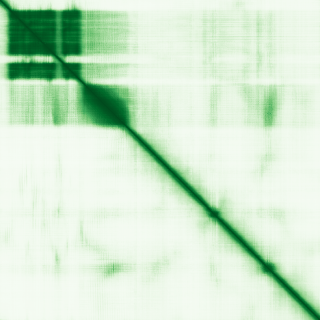
Mean pLDDT
59.6/ 100
Low
492 residues
Confidence breakdown
- Very high(≥ 90)27%
- Confident(70–90)7%
- Low(50–70)12%
- Very low(< 50)54%
Open interactive 3D viewer
AlphaFold (Jumper et al., 2021) · CC BY 4.0
heat shock transcription factor 4
Annotations refreshed 3 months ago.
Diagnostic Grade (Green)
Bilateral congenital or childhood onset cataracts
BOTH monoallelic and biallelic, autosomal or pseudoautosomalDDG2P
MONOALLELIC, autosomal or pseudoautosomal, imprinted status unknownFetal anomalies
BOTH monoallelic and biallelic, autosomal or pseudoautosomalIntellectual disability
MONOALLELIC, autosomal or pseudoautosomal, imprinted status unknownStructural eye disease
MONOALLELIC, autosomal or pseudoautosomal, NOT imprintedcataract 5 multiple types
early-onset non-syndromic cataract
neurodegenerative disease
Total congenital cataract
total early-onset cataract
Developmental cataract
hereditary disease
Posterior polar cataract
early-onset zonular cataract
cataract
Score is the Open Targets composite evidence score (0-1). Higher = stronger gene-disease association.
Heat shock factor protein 4
Heat-shock transcription factor that specifically binds heat shock promoter elements (HSE) (PubMed:22587838, PubMed:23507146). Required for denucleation and organelle rupture and degradation that occur during eye lens terminal differentiation, when fiber cells that compose the lens degrade all membrane-bound organelles in order to provide lens with transparency to allow the passage of light (By similarity). In this process, may regulate denucleation of lens fiber cells in part by activating DNASE2B transcription (By similarity). May be involved in DNA repair through the transcriptional regulation of RAD51 (PubMed:22587838). May up-regulate p53/TP53 protein in eye lens fiber cells, possibly through protein stabilization (PubMed:28981088). In the eye lens, controls the expression of alpha-crystallin B chain/CRYAB and consequently may be involved in the regulation of lysosomal acidification (By similarity)
Curated MONDO disease pages that list HSF4 among their top associated genes.
HSF4 · Q9ULV5
Mean pLDDT
59.6/ 100
Low
492 residues
Confidence breakdown
AlphaFold (Jumper et al., 2021) · CC BY 4.0