AlphaFold predicted structure
HSPA1L · P34931
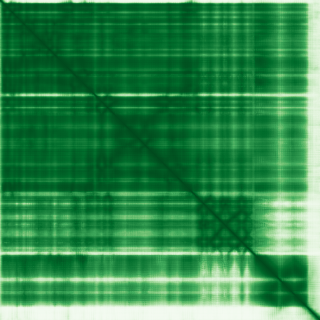
Mean pLDDT
88.8/ 100
Confident
641 residues
Confidence breakdown
- Very high(≥ 90)67%
- Confident(70–90)26%
- Low(50–70)2%
- Very low(< 50)5%
AlphaFold (Jumper et al., 2021) · CC BY 4.0
heat shock protein family A (Hsp70) member 1 like
Annotations refreshed 9 hours ago.
Moderate Evidence (Amber)
Primary immunodeficiency or monogenic inflammatory bowel disease
MONOALLELIC, autosomal or pseudoautosomal, NOT imprintedinflammatory bowel disease 1
chronic obstructive pulmonary disease
inflammatory bowel disease
cancer
colorectal carcinoma
idiopathic pulmonary fibrosis
lung cancer
lung carcinoma
age-related macular degeneration
male infertility
Score is the Open Targets composite evidence score (0-1). Higher = stronger gene-disease association.
Heat shock 70 kDa protein 1-like
Molecular chaperone implicated in a wide variety of cellular processes, including protection of the proteome from stress, folding and transport of newly synthesized polypeptides, activation of proteolysis of misfolded proteins and the formation and dissociation of protein complexes. Plays a pivotal role in the protein quality control system, ensuring the correct folding of proteins, the re-folding of misfolded proteins and controlling the targeting of proteins for subsequent degradation. This is achieved through cycles of ATP binding, ATP hydrolysis and ADP release, mediated by co-chaperones. The affinity for polypeptides is regulated by its nucleotide bound state. In the ATP-bound form, it has a low affinity for substrate proteins. However, upon hydrolysis of the ATP to ADP, it undergoes a conformational change that increases its affinity for substrate proteins. It goes through repeated cycles of ATP hydrolysis and nucleotide exchange, which permits cycles of substrate binding and release (PubMed:26865365). Positive regulator of PRKN translocation to damaged mitochondria (PubMed:24270810)
HSPA1L · P34931

Mean pLDDT
88.8/ 100
Confident
641 residues
Confidence breakdown
AlphaFold (Jumper et al., 2021) · CC BY 4.0