
AlphaFold predicted structure
HSPB1 · P04792
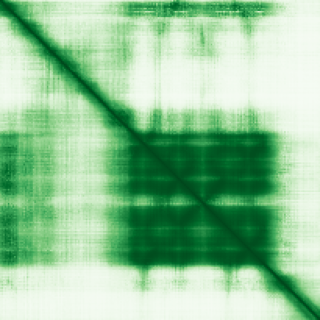
Mean pLDDT
68.9/ 100
Low
205 residues
Confidence breakdown
- Very high(≥ 90)33%
- Confident(70–90)15%
- Low(50–70)24%
- Very low(< 50)28%
Open interactive 3D viewer
AlphaFold (Jumper et al., 2021) · CC BY 4.0
heat shock protein family B (small) member 1
Annotations refreshed 3 months ago.
Diagnostic Grade (Green)
Distal myopathies
MONOALLELIC, autosomal or pseudoautosomal, NOT imprintedHereditary neuropathy
MONOALLELIC, autosomal or pseudoautosomal, imprinted status unknownHereditary neuropathy or pain disorder
MONOALLELIC, autosomal or pseudoautosomal, imprinted status unknownPaediatric motor neuronopathies
MONOALLELIC, autosomal or pseudoautosomal, NOT imprintedAdult onset neurodegenerative disorder
MONOALLELIC, autosomal or pseudoautosomal, NOT imprintedneuronopathy, distal hereditary motor, type 2B
Charcot-Marie-Tooth disease axonal type 2F
Autosomal dominant Charcot-Marie-Tooth disease type 2F
Charcot-Marie-Tooth disease
hereditary disease
distal hereditary motor neuropathy type 2
distal hereditary motor neuropathy
Charcot-Marie-Tooth disease type 4
breast cancer
prostate cancer
Score is the Open Targets composite evidence score (0-1). Higher = stronger gene-disease association.
Heat shock protein beta-1
Small heat shock protein which functions as a molecular chaperone probably maintaining denatured proteins in a folding-competent state (PubMed:10383393, PubMed:20178975). Plays a role in stress resistance and actin organization (PubMed:19166925). Through its molecular chaperone activity may regulate numerous biological processes including the phosphorylation and the axonal transport of neurofilament proteins (PubMed:23728742)
HSPB1 · P04792
Mean pLDDT
68.9/ 100
Low
205 residues
Confidence breakdown
AlphaFold (Jumper et al., 2021) · CC BY 4.0