
AlphaFold predicted structure
HTRA1 · Q92743
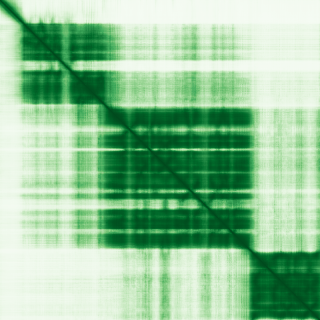
Mean pLDDT
83.3/ 100
Confident
480 residues
Confidence breakdown
- Very high(≥ 90)52%
- Confident(70–90)32%
- Low(50–70)8%
- Very low(< 50)9%
Open interactive 3D viewer
AlphaFold (Jumper et al., 2021) · CC BY 4.0
HtrA serine peptidase 1
Annotations refreshed 2 months ago.
Diagnostic Grade (Green)
Adult onset leukodystrophy
BOTH monoallelic and biallelic, autosomal or pseudoautosomalAdult onset neurodegenerative disorder
BOTH monoallelic and biallelic, autosomal or pseudoautosomalFamilial cerebral small vessel disease
BOTH monoallelic and biallelic, autosomal or pseudoautosomalCerebral vascular malformations
UnknownEarly onset dementia (encompassing fronto-temporal dementia and prion disease)
Inherited white matter disorders
Retinal disorders
MONOALLELIC, autosomal or pseudoautosomal, imprinted status unknownWhite matter disorders and cerebral calcification - narrow panel
Unknowncerebral arteriopathy, autosomal dominant, with subcortical infarcts and leukoencephalopathy, type 2
CARASIL
CARASIL syndrome
age-related macular degeneration
macular degeneration
age related macular degeneration 7
HTRA1-related autosomal dominant cerebral small vessel disease
wet macular degeneration
HTRA1-related cerebral small vessel disease
coronary artery disorder
Score is the Open Targets composite evidence score (0-1). Higher = stronger gene-disease association.
Serine protease HTRA1
Serine protease with a variety of targets, including extracellular matrix proteins such as fibronectin. HTRA1-generated fibronectin fragments further induce synovial cells to up-regulate MMP1 and MMP3 production. May also degrade proteoglycans, such as aggrecan, decorin and fibromodulin. Through cleavage of proteoglycans, may release soluble FGF-glycosaminoglycan complexes that promote the range and intensity of FGF signals in the extracellular space. Regulates the availability of insulin-like growth factors (IGFs) by cleaving IGF-binding proteins. Inhibits signaling mediated by TGF-beta family members. This activity requires the integrity of the catalytic site, although it is unclear whether TGF-beta proteins are themselves degraded. By acting on TGF-beta signaling, may regulate many physiological processes, including retinal angiogenesis and neuronal survival and maturation during development. Intracellularly, degrades TSC2, leading to the activation of TSC2 downstream targets
Curated MONDO disease pages that list HTRA1 among their top associated genes.
HTRA1 · Q92743
Mean pLDDT
83.3/ 100
Confident
480 residues
Confidence breakdown
AlphaFold (Jumper et al., 2021) · CC BY 4.0