Skip to content
GenoLensGenoLens

ICOSLG

Chr 21q22.3

inducible T cell costimulator ligand

Aliases:
KIAA0653, GL50, B7-H2, B7RP-1, B7H2
MANE:
ENST00000407780.8

Annotations refreshed 9 hours ago.

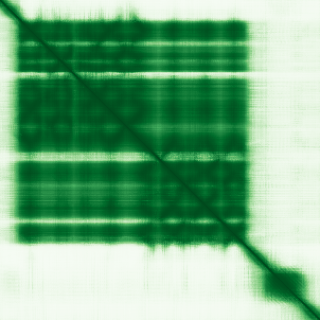
Predicted protein structure

Clinical relevance (Genomics England PanelApp)

Diagnostic Grade (Green)

  • COVID-19 research

    BIALLELIC, autosomal or pseudoautosomal
  • Primary immunodeficiency or monogenic inflammatory bowel disease

    BIALLELIC, autosomal or pseudoautosomal

Disease associations (Open Targets)

  • immunodeficiency 119

    0.35
  • combined immunodeficiency

    0.31
  • rheumatoid arthritis

    0.28
  • Combined T and B cell immunodeficiency

    0.27
  • hereditary disease

    0.27
  • depressive disorder

    0.19
  • severe combined immunodeficiency

    0.18
  • cardiomyopathy

    0.15
  • benign urinary system neoplasm

    0.15
  • neoplasm

    0.12

Score is the Open Targets composite evidence score (0-1). Higher = stronger gene-disease association.

Protein function (UniProt)

ICOS ligand

Ligand for the T-cell-specific cell surface receptor ICOS. Acts as a costimulatory signal for T-cell proliferation and cytokine secretion (PubMed:11007762, PubMed:11023515, PubMed:30498080). Also induces B-cell proliferation and differentiation into plasma cells. Could play an important role in mediating local tissue responses to inflammatory conditions, as well as in modulating the secondary immune response by co-stimulating memory T-cell function (By similarity). In endothelial cells, required for proper neutrophil transmigration in response to chemoattractants, such as CXCL8/IL8 or N-formyl-methionyl peptides (fMLP) (PubMed:30498080)

Data sources: HGNC (CC BY 4.0), AlphaFold (CC BY 4.0, Jumper et al. Nature 2021), Genomics England PanelApp (CC BY 4.0), ClinGen, Open Targets (CC0), UniProt.

Not for sole clinical decision-making. Always verify against primary sources.