
AlphaFold predicted structure
IDH3B · O43837
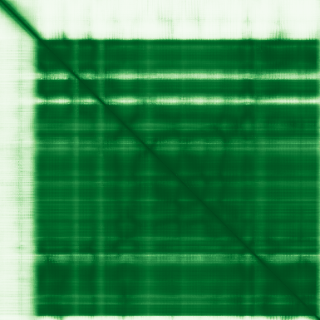
Mean pLDDT
87.8/ 100
Confident
385 residues
Confidence breakdown
- Very high(≥ 90)78%
- Confident(70–90)8%
- Low(50–70)2%
- Very low(< 50)12%
Open interactive 3D viewer
AlphaFold (Jumper et al., 2021) · CC BY 4.0
isocitrate dehydrogenase (NAD(+)) 3 non-catalytic subunit beta
Annotations refreshed 2 months ago.
Diagnostic Grade (Green)
Retinal disorders
BIALLELIC, autosomal or pseudoautosomalMitochondrial disorders
BIALLELIC, autosomal or pseudoautosomalPossible mitochondrial disorder - nuclear genes
BIALLELIC, autosomal or pseudoautosomalGlaucoma (developmental)
Likely inborn error of metabolism
UnknownStructural eye disease
BIALLELIC, autosomal or pseudoautosomalretinitis pigmentosa
eye disorder
Posterior column ataxia - retinitis pigmentosa
neurodegenerative disease
ovarian neoplasm
Retinal dystrophy
placenta praevia
optic atrophy
Alzheimer disease
Cone rod dystrophy
Score is the Open Targets composite evidence score (0-1). Higher = stronger gene-disease association.
Isocitrate dehydrogenase [NAD] subunit beta, mitochondrial
Plays a structural role to facilitate the assembly and ensure the full activity of the enzyme catalyzing the decarboxylation of isocitrate (ICT) into alpha-ketoglutarate. The heterodimer composed of the alpha (IDH3A) and beta (IDH3B) subunits and the heterodimer composed of the alpha (IDH3A) and gamma (IDH3G) subunits, have considerable basal activity but the full activity of the heterotetramer (containing two subunits of IDH3A, one of IDH3B and one of IDH3G) requires the assembly and cooperative function of both heterodimers
IDH3B · O43837
Mean pLDDT
87.8/ 100
Confident
385 residues
Confidence breakdown
AlphaFold (Jumper et al., 2021) · CC BY 4.0