
AlphaFold predicted structure
IER3IP1 · Q9Y5U9
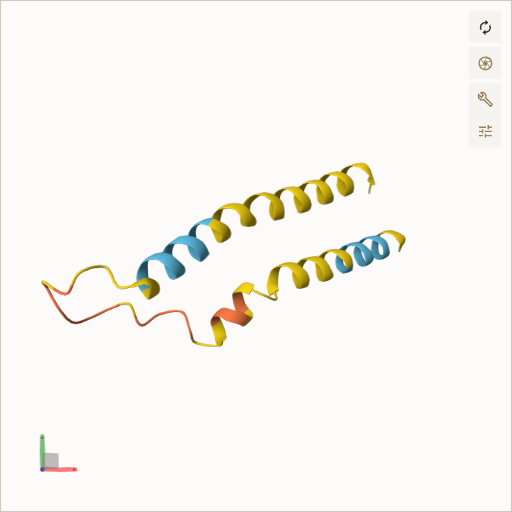

Mean pLDDT
61.6/ 100
Low
82 residues
Confidence breakdown
- Very high(≥ 90)0%
- Confident(70–90)23%
- Low(50–70)61%
- Very low(< 50)16%
Open interactive 3D viewer
AlphaFold (Jumper et al., 2021) · CC BY 4.0
immediate early response 3 interacting protein 1
Annotations refreshed 3 months ago.
Diagnostic Grade (Green)
DDG2P
BIALLELIC, autosomal or pseudoautosomalDiabetes with additional phenotypes suggestive of a monogenic aetiology
BIALLELIC, autosomal or pseudoautosomalEarly onset or syndromic epilepsy
BIALLELIC, autosomal or pseudoautosomalFamilial diabetes
BIALLELIC, autosomal or pseudoautosomalFetal anomalies
BIALLELIC, autosomal or pseudoautosomalIntellectual disability
BIALLELIC, autosomal or pseudoautosomalLikely inborn error of metabolism
BIALLELIC, autosomal or pseudoautosomalNeonatal diabetes
BIALLELIC, autosomal or pseudoautosomal+8 more panels — install the extension to see the full list inline on any page.
microcephaly, epilepsy, and diabetes syndrome 1
microcephaly, epilepsy, and diabetes syndrome
neurodegenerative disease
Intellectual disability
lysosomal storage disease
hereditary disease
diabetes mellitus
Abnormal urine sodium concentration
Abnormality of the skeletal system
alcohol drinking
Score is the Open Targets composite evidence score (0-1). Higher = stronger gene-disease association.
Immediate early response 3-interacting protein 1
Regulator of endoplasmic reticulum secretion that acts as a key determinant of brain size (PubMed:33122427). Required for secretion of extracellular matrix proteins (PubMed:33122427). Required for correct brain development by depositing sufficient extracellular matrix proteins for tissue integrity and the proliferation of neural progenitors (PubMed:33122427). Acts as a regulator of the unfolded protein response (UPR) (By similarity)
IER3IP1 · Q9Y5U9
Mean pLDDT
61.6/ 100
Low
82 residues
Confidence breakdown
AlphaFold (Jumper et al., 2021) · CC BY 4.0