
AlphaFold predicted structure
IFNAR2 · P48551
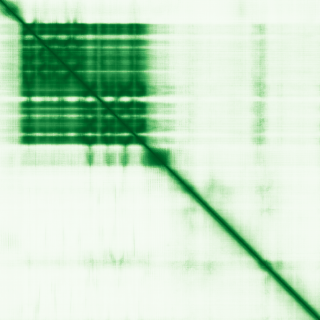
Mean pLDDT
64.4/ 100
Low
515 residues
Confidence breakdown
- Very high(≥ 90)27%
- Confident(70–90)14%
- Low(50–70)20%
- Very low(< 50)39%
Open interactive 3D viewer
AlphaFold (Jumper et al., 2021) · CC BY 4.0
interferon alpha and beta receptor subunit 2
Annotations refreshed 2 months ago.
Diagnostic Grade (Green)
COVID-19 research
BIALLELIC, autosomal or pseudoautosomalPrimary immunodeficiency or monogenic inflammatory bowel disease
BIALLELIC, autosomal or pseudoautosomalInherited bleeding disorders
UnknownIntellectual disability
immunodeficiency 45
COVID-19
chronic hepatitis B virus infection
chronic hepatitis C virus infection
multiple sclerosis
neoplasm
hepatitis C virus infection
melanoma
hepatitis B virus infection
acquired polycythemia vera
Score is the Open Targets composite evidence score (0-1). Higher = stronger gene-disease association.
Interferon alpha/beta receptor 2
Together with IFNAR1, forms the heterodimeric receptor for type I interferons (including interferons alpha, beta, epsilon, omega and kappa) (PubMed:10049744, PubMed:10556041, PubMed:21854986, PubMed:26424569, PubMed:28165510, PubMed:32972995, PubMed:7665574, PubMed:7759950, PubMed:8181059, PubMed:8798579, PubMed:8969169). Type I interferon binding activates the JAK-STAT signaling cascade, resulting in transcriptional activation or repression of interferon-regulated genes that encode the effectors of the interferon response (PubMed:10049744, PubMed:17517919, PubMed:21854986, PubMed:26424569, PubMed:28165510, PubMed:32972995, PubMed:7665574, PubMed:7759950, PubMed:8181059, PubMed:8798579, PubMed:8969169). Mechanistically, type I interferon-binding brings the IFNAR1 and IFNAR2 subunits into close proximity with one another, driving their associated Janus kinases (JAKs) (TYK2 bound to IFNAR1 and JAK1 bound to IFNAR2) to cross-phosphorylate one another (PubMed:10556041, PubMed:11682488, PubMed:12105218, PubMed:21854986, PubMed:32972995). The activated kinases phosphorylate specific tyrosine residues on the intracellular domains of IFNAR1 and IFNAR2, forming docking sites for the STAT transcription factors (STAT1, STAT2 and STAT) (PubMed:11682488, PubMed:12105218, PubMed:21854986, PubMed:32972995). STAT proteins are then phosphorylated by the JAKs, promoting their translocation into the nucleus to regulate expression of interferon-regulated genes (PubMed:12105218, PubMed:28165510, PubMed:9121453)
Curated MONDO disease pages that list IFNAR2 among their top associated genes.
IFNAR2 · P48551
Mean pLDDT
64.4/ 100
Low
515 residues
Confidence breakdown
AlphaFold (Jumper et al., 2021) · CC BY 4.0