
AlphaFold predicted structure
IFT52 · Q9Y366
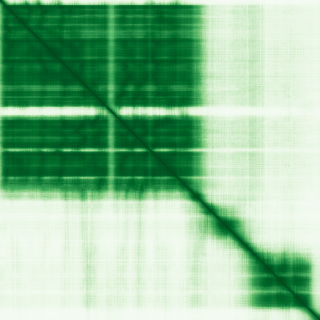
Mean pLDDT
84.3/ 100
Confident
437 residues
Confidence breakdown
- Very high(≥ 90)43%
- Confident(70–90)45%
- Low(50–70)6%
- Very low(< 50)6%
Open interactive 3D viewer
AlphaFold (Jumper et al., 2021) · CC BY 4.0
intraflagellar transport 52
Annotations refreshed 2 months ago.
Diagnostic Grade (Green)
Fetal anomalies
BIALLELIC, autosomal or pseudoautosomalRare multisystem ciliopathy disorders
BIALLELIC, autosomal or pseudoautosomalSkeletal ciliopathies
BIALLELIC, autosomal or pseudoautosomalSkeletal dysplasia
BIALLELIC, autosomal or pseudoautosomalThoracic dystrophies
BIALLELIC, autosomal or pseudoautosomalClefting
BIALLELIC, autosomal or pseudoautosomalChildhood onset dystonia, chorea or related movement disorder
BIALLELIC, autosomal or pseudoautosomalDuctal plate malformation
BIALLELIC, autosomal or pseudoautosomal+1 more panels — install the extension to see the full list inline on any page.
short-rib thoracic dysplasia 16 with or without polydactyly
short rib-polydactyly syndrome
cranioectodermal dysplasia
short rib dysplasia
type 2 diabetes mellitus
pathological myopia
ciliopathy
age-related macular degeneration
gastrointestinal stromal tumor
Short ribs
Score is the Open Targets composite evidence score (0-1). Higher = stronger gene-disease association.
Intraflagellar transport protein 52 homolog
Involved in ciliogenesis as part of a complex involved in intraflagellar transport (IFT), the bi-directional movement of particles required for the assembly, maintenance and functioning of primary cilia (PubMed:27466190). Required for the anterograde transport of IFT88 (PubMed:27466190)
IFT52 · Q9Y366
Mean pLDDT
84.3/ 100
Confident
437 residues
Confidence breakdown
AlphaFold (Jumper et al., 2021) · CC BY 4.0