Skip to content
GenoLensGenoLens

IFT57

Chr 3q13.12-q13.13

intraflagellar transport 57

Aliases:
FLJ10147, HIPPI, MHS4R2
MANE:
ENST00000264538.4

Annotations refreshed 9 hours ago.

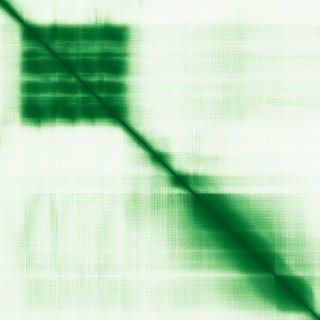
Predicted protein structure

Clinical relevance (Genomics England PanelApp)

Diagnostic Grade (Green)

  • Fetal anomalies

    BIALLELIC, autosomal or pseudoautosomal
  • Bardet Biedl syndrome

    BIALLELIC, autosomal or pseudoautosomal
  • Limb disorders

    BIALLELIC, autosomal or pseudoautosomal

Disease associations (Open Targets)

  • orofaciodigital syndrome 18

    0.52
  • Bardet-Biedl syndrome

    0.46
  • hypothyroidism

    0.40
  • orofaciodigital syndrome

    0.37
  • smoking cessation

    0.33
  • nutritional deficiency disease

    0.29
  • neurodegenerative disease

    0.26
  • mixed connective tissue disease

    0.24
  • ciliopathy

    0.23
  • smoking initiation

    0.12

Score is the Open Targets composite evidence score (0-1). Higher = stronger gene-disease association.

Protein function (UniProt)

Intraflagellar transport protein 57 homolog

Required for the formation of cilia. Plays an indirect role in sonic hedgehog signaling, cilia being required for all activity of the hedgehog pathway (By similarity). Together with RAB23 and KIF17, it is required for the localization of specific G protein-coupled receptors, such as dopamime receptor DRD1, to primary cilia (PubMed:26182404). Has pro-apoptotic function via its interaction with HIP1, leading to recruit caspase-8 (CASP8) and trigger apoptosis. Has the ability to bind DNA sequence motif 5'-AAAGACATG-3' present in the promoter of caspase genes such as CASP1, CASP8 and CASP10, suggesting that it may act as a transcription regulator; however the relevance of such function remains unclear

Data sources: HGNC (CC BY 4.0), AlphaFold (CC BY 4.0, Jumper et al. Nature 2021), Genomics England PanelApp (CC BY 4.0), ClinGen, Open Targets (CC0), UniProt.

Not for sole clinical decision-making. Always verify against primary sources.