
AlphaFold predicted structure
IGHM · P01871
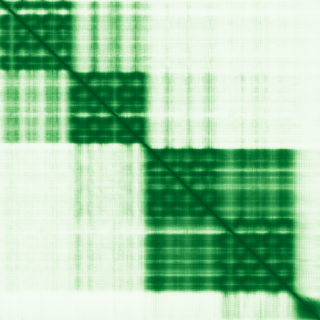
Mean pLDDT
85.4/ 100
Confident
474 residues
Confidence breakdown
- Very high(≥ 90)53%
- Confident(70–90)35%
- Low(50–70)8%
- Very low(< 50)4%
Open interactive 3D viewer
AlphaFold (Jumper et al., 2021) · CC BY 4.0
immunoglobulin heavy constant mu
Annotations refreshed 2 months ago.
Diagnostic Grade (Green)
COVID-19 research
BIALLELIC, autosomal or pseudoautosomalPrimary immunodeficiency or monogenic inflammatory bowel disease
BIALLELIC, autosomal or pseudoautosomalisolated agammaglobulinemia
agammaglobulinemia
autosomal agammaglobulinemia
BENTA disease
activated PI3K-delta syndrome
common variable immunodeficiency
Autosomal recessive systemic lupus erythematosus
autosomal systemic lupus erythematosus type 16
Barrett esophagus
C1Q deficiency 1
Score is the Open Targets composite evidence score (0-1). Higher = stronger gene-disease association.
Immunoglobulin heavy constant mu
Constant region of immunoglobulin heavy chains. Immunoglobulins, also known as antibodies, are membrane-bound or secreted glycoproteins produced by B lymphocytes. In the recognition phase of humoral immunity, the membrane-bound immunoglobulins serve as receptors which, upon binding of a specific antigen, trigger the clonal expansion and differentiation of B lymphocytes into immunoglobulins-secreting plasma cells. Secreted immunoglobulins mediate the effector phase of humoral immunity, which results in the elimination of bound antigens (PubMed:20176268, PubMed:22158414). The antigen binding site is formed by the variable domain of one heavy chain, together with that of its associated light chain. Thus, each immunoglobulin has two antigen binding sites with remarkable affinity for a particular antigen. The variable domains are assembled by a process called V-(D)-J rearrangement and can then be subjected to somatic hypermutations which, after exposure to antigen and selection, allow affinity maturation for a particular antigen (PubMed:17576170, PubMed:20176268)
IGHM · P01871
Mean pLDDT
85.4/ 100
Confident
474 residues
Confidence breakdown
AlphaFold (Jumper et al., 2021) · CC BY 4.0